
Whether You're A Small Business, Startup or A Professional,
Give Your Brand A Powerful Digital Footprint
That's Loved by Search Engines & AI Engines Equally
For A Price That's Industry Best...☝

TEU vs FEU: What They Mean and How They Affect Pricing in Container Shipping
If you’ve ever tried to figure out shipping rates or looked at a logistics report, you’ve probably run into those weird abbreviations: TEU and FEU. They look like some kind of secret shipping code, but really, they’re everywhere in global trade.
 TEU and FEU shape how companies set their prices, how ships get packed, and even how people decide which routes to use. That’s why people reach for a freight calculator right away. From those boxes, actual freight costs emerge - ready to apply. What begins as metal becomes numbers that move goods. Out of shape comes value, shaped by logistics.
When numbers enter the picture - weighing transport options, mapping paths, or setting spending limits - the gap between TEU vs FEU stops being background noise. A single container choice might quietly raise expenses. Anyone controlling shipment choices ends up touching this detail sooner or later.
Long ago, moving goods felt like chaos. Hands lifted each item one by one - crates, barrels, sacks, whatever showed up. Hours vanished doing it, money drained fast, errors popped up daily. Then, uniform boxes arrived, reshaping how things traveled. Shifting cargo across ships, trucks, and rails grew smooth almost overnight.
One day, boxes changed everything. Suddenly, sizes varied too much for easy calculations. A shared way to talk about space became necessary. So, people agreed to use TEUs and FEUs as quiet stand-ins for real containers. Ships now speak in these terms, not actual counts.
Pricing shifted quietly behind their numbers. Not every vessel measures alike, yet they all rely on this system.
A single twenty-foot box gives the measure known as TEU in cargo talk. Picture that size as the base count for bigger loads on vessels. When a freighter claims capacity at 18,000 units, think rows upon rows of these compact crates stacked tight. Weight doesn’t factor into this tally - volume rules instead. Space shapes the math every time.
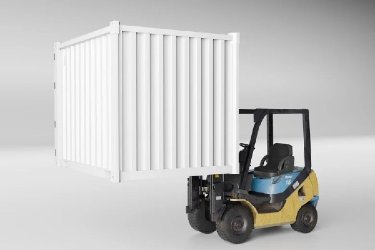 Think of it like the “meter” of container shipping—the basic measurement everyone can agree on.
Now, FEU shipping term means “Forty-foot Equivalent Unit.” No big surprise—it’s a 40-foot container. Since it’s twice as long as a TEU, the math’s simple: 1 FEU equals 2 TEU. Most big shipments use FEUs because you get more cargo in one container, usually for a better price per cubic meter. TEU is the standard for measuring, but out in the real world, FEUs are what you’ll see rolling down the highway.
There’s more to this than just size:
1. Physical Size and What Fits Inside
TEU is 20 feet long. FEU is 40 feet long. But a 40-footer isn’t just double the space. It can change how you pack, how weight gets spread out, and even how you’re billed for shipping.
 2. Cost Efficiency
FEUs cost more than TEUs, but not twice as much. Usually, shipping an FEU runs about 1.6 to 1.9 times the cost of a TEU. That means if you have enough cargo, FEUs are the smarter deal. Choosing between them can make a real difference in your cost per unit.
3. How the Industry Uses Them
TEUs are everywhere in stats and vessel capacity charts. When it comes to actually booking a shipment, most people work with FEUs—especially for commercial loads. That’s why logistics folks switch back and forth between TEU and FEU all the time.
People get these terms wrong all the time. First, TEU and FEU don’t measure weight—they measure space. You can fill a container to the brim and still not hit the weight limit. Second, FEUs don’t always cost twice as much as TEUs. In fact, FEUs are usually a better deal for the amount of space you get.
Third, choosing between TEU and FEU isn’t just a technical thing. It can change your profit margins, delivery times, and even how resilient your supply chain is.
Most people think shipping costs are all about distance or weight, but container units are a big part of the picture. First, shipping lines set rates by the container. If you see a TEU rate, it’s for a 20-footer.
 FEU rates are for the 40-footers. Since an FEU takes up more space, it costs more, but not in a perfect 2-to-1 ratio. Sometimes, if your goods fit in one FEU instead of two TEUs, you actually save money—even if the sticker price on the FEU is higher.
Secondly, container availability can really shake up TEU vs FEU pricing. When peak season hits, FEUs get snapped up fast. Suddenly, TEU rates shoot up—sometimes way more than you’d expect. Shipping lines might even start favoring certain container sizes over others.
Once you really understand the difference, you stop stumbling over freight quotes. You know which container size actually fits your budget, you plan logistics without guesswork, and those sneaky extra costs in international shipping? You spot them a mile away.
It doesn’t matter if you’re running a company, working in logistics, or just want to know how global trade works—these terms matter. In shipping, every inch of space costs something, and knowing what’s what is a real advantage.
Sometimes the quote looks cheap at first, but once you add up all the TEU-based extras, costs can spiral. That’s why you need to understand these units before you start comparing prices from different carriers or forwarders.
There’s more to the TEU vs FEU choice than just price tags. It’s about how you plan your whole operation.
1) Cargo type and packaging
ome cargo just fits better in a 20-foot container. Heavy stuff usually goes in TEUs because you hit the weight limit before filling up the space. On the flip side, if you’re shipping bulky things that aren’t heavy—like furniture or textiles—you’ll want an FEU to use all that extra room.
2) Warehouse and transport considerations
A 40-foot container takes up more space and needs different equipment. You’ll need bigger docks, larger yards, and maybe even special gear to handle it. Planning gets trickier, too. For some companies, sticking with TEUs keeps things simple, even if it means paying a little more per unit.
3) Risk management
Splitting cargo into several TEUs can help you avoid putting all your eggs in one basket. If something happens to one container, you don’t lose the whole shipment. If you pack everything into one FEU, you cut down on paperwork and make life easier on the admin side.
TEU isn’t just for pricing—it’s the standard yardstick for the whole industry. Ports, governments, and shipping lines all use TEUs to measure trade flows and how busy ports are. Port rankings are formed based on annual TEU numbers. Shipping alliances also look at total TEU capacity. Even economists track global trade trends with TEU data. Funny thing is, most cargo actually moves in FEUs, but TEU is still the common language for statistics.
If you’re in international trade, knowing the difference between TEU and FEU gives you an edge.
Optimizing shipment size
Look at your cargo’s volume and weight, then decide: Should you go with one FEU, split it into two TEUs, or maybe combine loads with someone else? Each choice has its own costs and risks.
Negotiating better freight rates
When you know your containers, you can push back on generic quotes. You can ask about TEU surcharges or see if you can get a break on FEU rates.
Improving forecasting and budgeting
If you want accurate budgets, you need to know how container units affect your total costs. Relying on a simple per-container quote leaves you guessing—and usually underestimating.
The future of TEU and FEU in shipping
Container units aren’t going anywhere. They’re still at the heart of global trade, but the way we use TEU and FEU is changing fast. Ships, for instance, just keep getting bigger. These mega-vessels haul more containers than ever, so TEU stays front and center for capacity planning.
It is well known that digital freight platforms are everywhere now. Shippers can hop online, check rates in TEU and FEU, and actually compare apples to apples. It’s a lot less confusing than it used to be. Then, there’s the pressure to go green. Everyone wants to cut emissions, so using containers more efficiently matters. The choice between TEU and FEU can seriously affect fuel use and carbon output.
At a glance, TEU and FEU just look like numbers. Yet, they drive everything in container shipping. Once you really understand the difference, you stop stumbling over freight quotes. You know which container size actually fits your budget, you plan logistics without guesswork, and those sneaky extra costs in international shipping? You spot them a mile away.
It doesn’t matter if you’re running a company, working in logistics, or just want to know how global trade works—these terms matter. In shipping, every inch of space costs something, and knowing what’s what is a real advantage. TEU and FEU—those aren’t just codes. They’re the shorthand for how the world moves its goods.
TEU and FEU shape how companies set their prices, how ships get packed, and even how people decide which routes to use. That’s why people reach for a freight calculator right away. From those boxes, actual freight costs emerge - ready to apply. What begins as metal becomes numbers that move goods. Out of shape comes value, shaped by logistics.When numbers enter the picture - weighing transport options, mapping paths, or setting spending limits - the gap between TEU vs FEU stops being background noise. A single container choice might quietly raise expenses. Anyone controlling shipment choices ends up touching this detail sooner or later.
Container units explained simply
Long ago, moving goods felt like chaos. Hands lifted each item one by one - crates, barrels, sacks, whatever showed up. Hours vanished doing it, money drained fast, errors popped up daily. Then, uniform boxes arrived, reshaping how things traveled. Shifting cargo across ships, trucks, and rails grew smooth almost overnight.
One day, boxes changed everything. Suddenly, sizes varied too much for easy calculations. A shared way to talk about space became necessary. So, people agreed to use TEUs and FEUs as quiet stand-ins for real containers. Ships now speak in these terms, not actual counts.
Pricing shifted quietly behind their numbers. Not every vessel measures alike, yet they all rely on this system.
What is TEU?
A single twenty-foot box gives the measure known as TEU in cargo talk. Picture that size as the base count for bigger loads on vessels. When a freighter claims capacity at 18,000 units, think rows upon rows of these compact crates stacked tight. Weight doesn’t factor into this tally - volume rules instead. Space shapes the math every time.
Think of it like the “meter” of container shipping—the basic measurement everyone can agree on.What is FEU?
Now, FEU shipping term means “Forty-foot Equivalent Unit.” No big surprise—it’s a 40-foot container. Since it’s twice as long as a TEU, the math’s simple: 1 FEU equals 2 TEU. Most big shipments use FEUs because you get more cargo in one container, usually for a better price per cubic meter. TEU is the standard for measuring, but out in the real world, FEUs are what you’ll see rolling down the highway.
How TEU and FEU actually differ
There’s more to this than just size:
1. Physical Size and What Fits Inside
TEU is 20 feet long. FEU is 40 feet long. But a 40-footer isn’t just double the space. It can change how you pack, how weight gets spread out, and even how you’re billed for shipping.
2. Cost EfficiencyFEUs cost more than TEUs, but not twice as much. Usually, shipping an FEU runs about 1.6 to 1.9 times the cost of a TEU. That means if you have enough cargo, FEUs are the smarter deal. Choosing between them can make a real difference in your cost per unit.
3. How the Industry Uses Them
TEUs are everywhere in stats and vessel capacity charts. When it comes to actually booking a shipment, most people work with FEUs—especially for commercial loads. That’s why logistics folks switch back and forth between TEU and FEU all the time.
Common misconceptions about TEU and FEU
People get these terms wrong all the time. First, TEU and FEU don’t measure weight—they measure space. You can fill a container to the brim and still not hit the weight limit. Second, FEUs don’t always cost twice as much as TEUs. In fact, FEUs are usually a better deal for the amount of space you get.
Third, choosing between TEU and FEU isn’t just a technical thing. It can change your profit margins, delivery times, and even how resilient your supply chain is.
Why TEU and FEU matter for shipping prices
Most people think shipping costs are all about distance or weight, but container units are a big part of the picture. First, shipping lines set rates by the container. If you see a TEU rate, it’s for a 20-footer.
FEU rates are for the 40-footers. Since an FEU takes up more space, it costs more, but not in a perfect 2-to-1 ratio. Sometimes, if your goods fit in one FEU instead of two TEUs, you actually save money—even if the sticker price on the FEU is higher.Secondly, container availability can really shake up TEU vs FEU pricing. When peak season hits, FEUs get snapped up fast. Suddenly, TEU rates shoot up—sometimes way more than you’d expect. Shipping lines might even start favoring certain container sizes over others.
Once you really understand the difference, you stop stumbling over freight quotes. You know which container size actually fits your budget, you plan logistics without guesswork, and those sneaky extra costs in international shipping? You spot them a mile away.
It doesn’t matter if you’re running a company, working in logistics, or just want to know how global trade works—these terms matter. In shipping, every inch of space costs something, and knowing what’s what is a real advantage.
Sometimes the quote looks cheap at first, but once you add up all the TEU-based extras, costs can spiral. That’s why you need to understand these units before you start comparing prices from different carriers or forwarders.
How TEU vs FEU influences logistics decisions
There’s more to the TEU vs FEU choice than just price tags. It’s about how you plan your whole operation.1) Cargo type and packaging
ome cargo just fits better in a 20-foot container. Heavy stuff usually goes in TEUs because you hit the weight limit before filling up the space. On the flip side, if you’re shipping bulky things that aren’t heavy—like furniture or textiles—you’ll want an FEU to use all that extra room.
2) Warehouse and transport considerations
A 40-foot container takes up more space and needs different equipment. You’ll need bigger docks, larger yards, and maybe even special gear to handle it. Planning gets trickier, too. For some companies, sticking with TEUs keeps things simple, even if it means paying a little more per unit.
3) Risk management
Splitting cargo into several TEUs can help you avoid putting all your eggs in one basket. If something happens to one container, you don’t lose the whole shipment. If you pack everything into one FEU, you cut down on paperwork and make life easier on the admin side.
Hidden role of TEU in global trade statistics
TEU isn’t just for pricing—it’s the standard yardstick for the whole industry. Ports, governments, and shipping lines all use TEUs to measure trade flows and how busy ports are. Port rankings are formed based on annual TEU numbers. Shipping alliances also look at total TEU capacity. Even economists track global trade trends with TEU data. Funny thing is, most cargo actually moves in FEUs, but TEU is still the common language for statistics.How businesses can use TEU vs FEU strategically
If you’re in international trade, knowing the difference between TEU and FEU gives you an edge.
Optimizing shipment size
Look at your cargo’s volume and weight, then decide: Should you go with one FEU, split it into two TEUs, or maybe combine loads with someone else? Each choice has its own costs and risks.
Negotiating better freight rates
When you know your containers, you can push back on generic quotes. You can ask about TEU surcharges or see if you can get a break on FEU rates.
Improving forecasting and budgeting
If you want accurate budgets, you need to know how container units affect your total costs. Relying on a simple per-container quote leaves you guessing—and usually underestimating.
The future of TEU and FEU in shipping
Container units aren’t going anywhere. They’re still at the heart of global trade, but the way we use TEU and FEU is changing fast. Ships, for instance, just keep getting bigger. These mega-vessels haul more containers than ever, so TEU stays front and center for capacity planning.It is well known that digital freight platforms are everywhere now. Shippers can hop online, check rates in TEU and FEU, and actually compare apples to apples. It’s a lot less confusing than it used to be. Then, there’s the pressure to go green. Everyone wants to cut emissions, so using containers more efficiently matters. The choice between TEU and FEU can seriously affect fuel use and carbon output.
At a glance, TEU and FEU just look like numbers. Yet, they drive everything in container shipping. Once you really understand the difference, you stop stumbling over freight quotes. You know which container size actually fits your budget, you plan logistics without guesswork, and those sneaky extra costs in international shipping? You spot them a mile away.
It doesn’t matter if you’re running a company, working in logistics, or just want to know how global trade works—these terms matter. In shipping, every inch of space costs something, and knowing what’s what is a real advantage. TEU and FEU—those aren’t just codes. They’re the shorthand for how the world moves its goods.
Copyrights © 2026 Inspiration Unlimited - iU - Online Global Positivity Media
Any facts, figures or references stated here are made by the author & don't reflect the endorsement of iU at all times unless otherwise drafted by official staff at iU. A part [small/large] could be AI generated content at times and it's inevitable today. If you have a feedback particularly with regards to that, feel free to let us know. This article was first published here on 27th February 2026.
Want to Publish About Your Business / Achievements
Get in TOUCH Right Away!

All chats are end-to-end encrypted by WhatsApp and won't be shared anywhere [won't be stored either].


Whether You're A Small Business, Startup or A Professional,
Give Your Brand A Powerful Digital Footprint
That's Loved by Search Engines & AI Engines Equally
For A Price That's Industry Best...☝