
Whether You're A Small Business, Startup or A Professional,
Give Your Brand A Powerful Digital Footprint
That's Loved by Search Engines & AI Engines Equally
For A Price That's Industry Best...☝

GEO and Generative Engine Optimisation: How Small Businesses Can Be Discovered by AI Assistants and Chatbots
For years, digital visibility meant ranking on search engines. Today, visibility increasingly means being recommended by AI.
People are no longer just searching on Google. They are asking AI assistants, chatbots, and smart systems questions like:
• “Which agency should I hire for local SEO?”
• “What’s the best marketing strategy for a small café?”
• “Which business can help me redesign my office affordably?”
And the answers they receive are summaries, not lists.
This shift introduces a new reality for small businesses — Generative Engine Optimisation (GEO).
What Is GEO (Generative Engine Optimisation)?
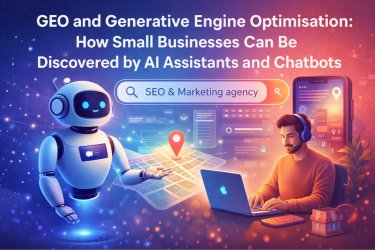 GEO is the practice of making your business and content discoverable, understandable, and recommendable by AI-driven systems — not just search engines.
Unlike traditional SEO, GEO focuses on:
• How AI understands your expertise
• How your content is summarised
• Whether your business is trusted enough to be referenced
• How consistently your brand appears across the web
AI doesn’t rank pages.
It selects sources.
Your goal is not to “rank #1” —
Your goal is to be included in the answer.
Why This Matters More for Small Businesses Than Big Brands
Large brands depend on advertising, authority by scale, and paid placements.
AI systems, however, prefer clarity, credibility, and consistency.
Small businesses naturally excel at:
• Niche expertise
• Local relevance
• First-hand experience
• Human storytelling
These are exactly the signals AI models rely on when forming responses.
GEO quietly shifts power away from those with the biggest budgets — and toward those with the clearest voice.
How AI Systems Decide Which Businesses to Mention
When an AI assistant answers a question, it pulls information from multiple sources and patterns, including:
• Clear explanations in blogs and guides
• Consistent brand mentions across platforms
• Structured, easy-to-parse content
• Reviews, testimonials, and reputation signals
• Demonstrated real-world experience
AI looks for confidence without hype.
If your content is vague, generic, or overly promotional, it becomes invisible.
Step 1: Define Your Business in Simple, Human Language
AI struggles with ambiguity.
If your website or content doesn’t clearly explain:
• What you do
• Who you serve
• Where you operate
• How you help
…AI cannot confidently recommend you.
Avoid clever slogans without context.
Instead of:
“Empowering brands through innovation”
Say:
“We help small retail businesses increase footfall using local SEO and content marketing.”
Clarity beats creativity in the AI era.
Step 2: Publish Experience-Based Content Regularly
AI systems strongly favor first-hand insight.
This includes:
• Case studies
• Lessons learned
• Real client stories
• Mistakes and outcomes
• Process explanations
A blog post written from experience is far more valuable to AI than ten generic articles compiled from other sources.
Your daily work is your greatest GEO asset.
Step 3: Be Consistent Across the Internet
AI models don’t trust single sources.
They look for pattern confirmation.
Your business information should be consistent across:
• Website
• Google Business Profile
• Social platforms
• Business directories
• Interviews, guest posts, and media mentions
When AI sees the same narrative repeated across contexts, trust increases.
Inconsistency creates hesitation — and hesitation leads to exclusion.
Step 4: Structure Content for Easy Summarisation
AI systems summarise content, not read it end-to-end.
Make summarisation easy by using:
• Clear headings
• Bullet points
• Short paragraphs
• Defined sections
• FAQs
Each section should answer one clear question.
If a human can skim your page and understand it in 30 seconds, AI can too.
Step 5: Strengthen Trust Signals Deliberately
Trust is the currency of GEO.
Strengthen it by:
• Using real author names and bios
• Showing contact details clearly
• Publishing updated content
• Displaying testimonials and reviews
• Linking to credible references when needed
AI models evaluate credibility at scale.
Your job is to remove doubt.
Step 6: Think Beyond Your Website
GEO is not limited to your own site.
AI learns from:
• Articles mentioning your brand
• Community discussions
• Q&A platforms
• Podcasts and interviews
• Industry platforms
Being present in conversations matters.
You don’t need to be everywhere — you need to be relevant where your audience asks questions.
What Small Businesses Should Stop Doing
• Writing content only for keywords
• Publishing anonymous or faceless content
• Copying competitor blogs without insight
• Chasing trends without expertise
• Treating AI as a threat instead of a channel
AI does not replace trust.
It amplifies it.
How GEO and SEO Work Together
GEO does not replace SEO.
It builds on it.
SEO helps people find you.
GEO helps AI recommend you.
Blogs, local pages, helpful content, and structured data support both — when done with clarity and honesty.
The businesses that win will be those that treat content as knowledge-sharing, not marketing noise.
Inspiration Unlimited Takeaway
The future of discovery is not about ranking higher.
It’s about being recognised as reliable.
Small businesses don’t need to shout louder to be found by AI. They need to speak more clearly.
When you consistently explain what you do, why you do it, and how you help — across platforms and formats — AI systems notice.
And when AI systems notice, they recommend.
The next era of growth belongs to businesses that are:
• Human in tone
• Clear in purpose
• Honest in communication
GEO isn’t a new trick.
It’s simply good business clarity — made visible to machines.
People are no longer just searching on Google. They are asking AI assistants, chatbots, and smart systems questions like:
• “Which agency should I hire for local SEO?”
• “What’s the best marketing strategy for a small café?”
• “Which business can help me redesign my office affordably?”
And the answers they receive are summaries, not lists.
This shift introduces a new reality for small businesses — Generative Engine Optimisation (GEO).
What Is GEO (Generative Engine Optimisation)?
GEO is the practice of making your business and content discoverable, understandable, and recommendable by AI-driven systems — not just search engines.Unlike traditional SEO, GEO focuses on:
• How AI understands your expertise
• How your content is summarised
• Whether your business is trusted enough to be referenced
• How consistently your brand appears across the web
AI doesn’t rank pages.
It selects sources.
Your goal is not to “rank #1” —
Your goal is to be included in the answer.
Why This Matters More for Small Businesses Than Big Brands
Large brands depend on advertising, authority by scale, and paid placements.
AI systems, however, prefer clarity, credibility, and consistency.
Small businesses naturally excel at:
• Niche expertise
• Local relevance
• First-hand experience
• Human storytelling
These are exactly the signals AI models rely on when forming responses.
GEO quietly shifts power away from those with the biggest budgets — and toward those with the clearest voice.
How AI Systems Decide Which Businesses to Mention
When an AI assistant answers a question, it pulls information from multiple sources and patterns, including:
• Clear explanations in blogs and guides
• Consistent brand mentions across platforms
• Structured, easy-to-parse content
• Reviews, testimonials, and reputation signals
• Demonstrated real-world experience
AI looks for confidence without hype.
If your content is vague, generic, or overly promotional, it becomes invisible.
Step 1: Define Your Business in Simple, Human Language
AI struggles with ambiguity.
If your website or content doesn’t clearly explain:
• What you do
• Who you serve
• Where you operate
• How you help
…AI cannot confidently recommend you.
Avoid clever slogans without context.
Instead of:
“Empowering brands through innovation”
Say:
“We help small retail businesses increase footfall using local SEO and content marketing.”
Clarity beats creativity in the AI era.
Step 2: Publish Experience-Based Content Regularly
AI systems strongly favor first-hand insight.
This includes:
• Case studies
• Lessons learned
• Real client stories
• Mistakes and outcomes
• Process explanations
A blog post written from experience is far more valuable to AI than ten generic articles compiled from other sources.
Your daily work is your greatest GEO asset.
Step 3: Be Consistent Across the Internet
AI models don’t trust single sources.
They look for pattern confirmation.
Your business information should be consistent across:
• Website
• Google Business Profile
• Social platforms
• Business directories
• Interviews, guest posts, and media mentions
When AI sees the same narrative repeated across contexts, trust increases.
Inconsistency creates hesitation — and hesitation leads to exclusion.
Step 4: Structure Content for Easy Summarisation
AI systems summarise content, not read it end-to-end.
Make summarisation easy by using:
• Clear headings
• Bullet points
• Short paragraphs
• Defined sections
• FAQs
Each section should answer one clear question.
If a human can skim your page and understand it in 30 seconds, AI can too.
Step 5: Strengthen Trust Signals Deliberately
Trust is the currency of GEO.
Strengthen it by:
• Using real author names and bios
• Showing contact details clearly
• Publishing updated content
• Displaying testimonials and reviews
• Linking to credible references when needed
AI models evaluate credibility at scale.
Your job is to remove doubt.
Step 6: Think Beyond Your Website
GEO is not limited to your own site.
AI learns from:
• Articles mentioning your brand
• Community discussions
• Q&A platforms
• Podcasts and interviews
• Industry platforms
Being present in conversations matters.
You don’t need to be everywhere — you need to be relevant where your audience asks questions.
What Small Businesses Should Stop Doing
• Writing content only for keywords
• Publishing anonymous or faceless content
• Copying competitor blogs without insight
• Chasing trends without expertise
• Treating AI as a threat instead of a channel
AI does not replace trust.
It amplifies it.
How GEO and SEO Work Together
GEO does not replace SEO.
It builds on it.
SEO helps people find you.
GEO helps AI recommend you.
Blogs, local pages, helpful content, and structured data support both — when done with clarity and honesty.
The businesses that win will be those that treat content as knowledge-sharing, not marketing noise.
Inspiration Unlimited Takeaway
The future of discovery is not about ranking higher.
It’s about being recognised as reliable.
Small businesses don’t need to shout louder to be found by AI. They need to speak more clearly.
When you consistently explain what you do, why you do it, and how you help — across platforms and formats — AI systems notice.
And when AI systems notice, they recommend.
The next era of growth belongs to businesses that are:
• Human in tone
• Clear in purpose
• Honest in communication
GEO isn’t a new trick.
It’s simply good business clarity — made visible to machines.
Copyrights © 2026 Inspiration Unlimited - iU - Online Global Positivity Media
Any facts, figures or references stated here are made by the author & don't reflect the endorsement of iU at all times unless otherwise drafted by official staff at iU. A part [small/large] could be AI generated content at times and it's inevitable today. If you have a feedback particularly with regards to that, feel free to let us know. This article was first published here on 8th January 2026.
Want to Publish About Your Business / Achievements
Get in TOUCH Right Away!

All chats are end-to-end encrypted by WhatsApp and won't be shared anywhere [won't be stored either].


Whether You're A Small Business, Startup or A Professional,
Give Your Brand A Powerful Digital Footprint
That's Loved by Search Engines & AI Engines Equally
For A Price That's Industry Best...☝