
Whether You're A Small Business, Startup or A Professional,
Give Your Brand A Powerful Digital Footprint
That's Loved by Search Engines & AI Engines Equally
For A Price That's Industry Best...☝

Punch: The Real Story of the Internet Adopted Baby Monkey And Why His Story Moved Everyone
Not every internet sensation begins with laughter. Some begin with silence.
A tiny baby macaque sitting alone.
Clutching a large plush toy.
Watching the world cautiously.
His name is Punch. And in early 2026, the internet didn’t just watch him — it adopted him.
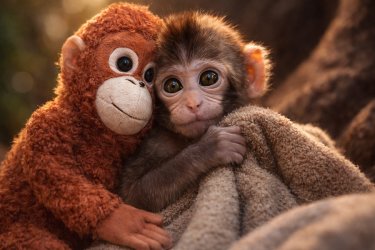 Punch is a rescued Japanese macaque at the Ichikawa City Zoo in Japan.
Abandoned by his mother at birth, he faced one of nature’s harshest realities — rejection in a species where maternal bonding is critical for survival. Zoo keepers stepped in to raise him. They fed him, nurtured him, and tried to integrate him slowly into a troop of over 60 macaques. But social life in the animal kingdom is complex.
Punch struggled.
To comfort him, keepers introduced a large stuffed orangutan toy. And something remarkable happened. Punch bonded with it. He clung to it. Dragged it around. Curled into it after tense social encounters. When other monkeys pushed him away — which experts say is normal social conditioning — Punch would instinctively run back to his plush companion.
That moment, captured on video, became the emotional heartbeat of the internet.
The viral clips showed something universal.
A small being navigating a world bigger than him.
Facing rejection.
Seeking comfort.
Psychologists refer to this reaction as the “baby schema” effect — where large eyes, small features, and vulnerable body language trigger caregiving instincts in humans. Punch’s wide eyes and hesitant movements didn’t just make him cute. They made him relatable. People saw their own childhood fears in him. Their own moments of not fitting in. Their own instinct to run toward safety when the world felt overwhelming.
What’s fascinating is not just that Punch went viral — but how people responded.
Hashtags like #HangInTherePunch trended. Viewers flooded comment sections with encouragement. Search engines even responded playfully — with heart animations appearing when his name was searched. In a digital environment often dominated by outrage, debate, and division, Punch’s story created something different. Collective empathy.
The internet didn’t mock him. It rooted for him.
Of course, viral fame comes with scrutiny.
Some viewers expressed concern over clips where older macaques appeared rough with Punch. But zoo officials clarified that these interactions were normal social learning behaviors within macaque communities.
Punch wasn’t being bullied. He was learning hierarchy. And gradually, updates showed him building bonds — grooming, playing, and integrating more confidently into the troop. His journey wasn’t just about vulnerability. It was about adaptation.
Punch’s story became symbolic because it mirrors a human narrative arc:
Abandonment.
Support.
Struggle.
Resilience.
Belonging.
It also reveals something profound about our times.
In a world overwhelmed with information, people are still deeply moved by authenticity.
No filters.
No script.
No production gimmicks.
Just a small life trying to belong.
When audiences say “we adopted Punch,” they aren’t speaking literally.
They’re expressing emotional investment.
Humans are wired for attachment. When we see vulnerability — especially in infants, human or animal — our brains activate caregiving circuits. That’s not weakness. That’s biology. Punch didn’t ask for global attention. But he triggered something ancient in us — the instinct to protect and nurture.
Punch’s story stands out not because it is dramatic, but because it is gentle.
It reminds us that:
Strength can look small.
Healing can look slow.
Support can come from unexpected places.
Sometimes, comfort is a plush toy. Sometimes, comfort is millions of strangers silently hoping you’ll be okay.
The internet often amplifies controversy. But occasionally, it amplifies compassion. Punch the baby monkey didn’t trend because of spectacle. He trended because people cared. And in that care lies something hopeful. Even in a hyper-digital world, empathy still scales.
A tiny baby macaque sitting alone.
Clutching a large plush toy.
Watching the world cautiously.
His name is Punch. And in early 2026, the internet didn’t just watch him — it adopted him.
Born Alone, Raised by Humans
Punch is a rescued Japanese macaque at the Ichikawa City Zoo in Japan.Abandoned by his mother at birth, he faced one of nature’s harshest realities — rejection in a species where maternal bonding is critical for survival. Zoo keepers stepped in to raise him. They fed him, nurtured him, and tried to integrate him slowly into a troop of over 60 macaques. But social life in the animal kingdom is complex.
Punch struggled.
The Plush Toy That Became His Anchor
To comfort him, keepers introduced a large stuffed orangutan toy. And something remarkable happened. Punch bonded with it. He clung to it. Dragged it around. Curled into it after tense social encounters. When other monkeys pushed him away — which experts say is normal social conditioning — Punch would instinctively run back to his plush companion.
That moment, captured on video, became the emotional heartbeat of the internet.
Why the World Couldn’t Look Away
The viral clips showed something universal.
A small being navigating a world bigger than him.
Facing rejection.
Seeking comfort.
Psychologists refer to this reaction as the “baby schema” effect — where large eyes, small features, and vulnerable body language trigger caregiving instincts in humans. Punch’s wide eyes and hesitant movements didn’t just make him cute. They made him relatable. People saw their own childhood fears in him. Their own moments of not fitting in. Their own instinct to run toward safety when the world felt overwhelming.
When the Internet Chooses Empathy
What’s fascinating is not just that Punch went viral — but how people responded.
Hashtags like #HangInTherePunch trended. Viewers flooded comment sections with encouragement. Search engines even responded playfully — with heart animations appearing when his name was searched. In a digital environment often dominated by outrage, debate, and division, Punch’s story created something different. Collective empathy.
The internet didn’t mock him. It rooted for him.
The Debate Behind the Virality
Of course, viral fame comes with scrutiny.Some viewers expressed concern over clips where older macaques appeared rough with Punch. But zoo officials clarified that these interactions were normal social learning behaviors within macaque communities.
Punch wasn’t being bullied. He was learning hierarchy. And gradually, updates showed him building bonds — grooming, playing, and integrating more confidently into the troop. His journey wasn’t just about vulnerability. It was about adaptation.
Why This Story Matters Beyond Cuteness
Punch’s story became symbolic because it mirrors a human narrative arc:
Abandonment.
Support.
Struggle.
Resilience.
Belonging.
It also reveals something profound about our times.
In a world overwhelmed with information, people are still deeply moved by authenticity.
No filters.
No script.
No production gimmicks.
Just a small life trying to belong.
The Psychology of Why We “Adopted” Him
When audiences say “we adopted Punch,” they aren’t speaking literally.
They’re expressing emotional investment.
Humans are wired for attachment. When we see vulnerability — especially in infants, human or animal — our brains activate caregiving circuits. That’s not weakness. That’s biology. Punch didn’t ask for global attention. But he triggered something ancient in us — the instinct to protect and nurture.
A Reminder in an Age of Noise
Punch’s story stands out not because it is dramatic, but because it is gentle.It reminds us that:
Strength can look small.
Healing can look slow.
Support can come from unexpected places.
Sometimes, comfort is a plush toy. Sometimes, comfort is millions of strangers silently hoping you’ll be okay.
The Greatest or the Biggest Lesson in this Story:
The internet often amplifies controversy. But occasionally, it amplifies compassion. Punch the baby monkey didn’t trend because of spectacle. He trended because people cared. And in that care lies something hopeful. Even in a hyper-digital world, empathy still scales.
Copyrights © 2026 Inspiration Unlimited - iU - Online Global Positivity Media
Any facts, figures or references stated here are made by the author & don't reflect the endorsement of iU at all times unless otherwise drafted by official staff at iU. A part [small/large] could be AI generated content at times and it's inevitable today. If you have a feedback particularly with regards to that, feel free to let us know. This article was first published here on 4th March 2026.
Want to Publish About Your Business / Achievements
Get in TOUCH Right Away!

All chats are end-to-end encrypted by WhatsApp and won't be shared anywhere [won't be stored either].


Whether You're A Small Business, Startup or A Professional,
Give Your Brand A Powerful Digital Footprint
That's Loved by Search Engines & AI Engines Equally
For A Price That's Industry Best...☝