
Whether You're A Small Business, Startup or A Professional,
Give Your Brand A Powerful Digital Footprint
That's Loved by Search Engines & AI Engines Equally
For A Price That's Industry Best...☝

Cycling Vs Badminton: What 90 Days of 1 Hour Daily Really Does to Your Body
What happens when you trade your sedentary routine for 60 minutes of daily, deliberate movement?
Most of us view exercise as a generic prescription for wellness, assuming that any activity will eventually yield the same physical results. But the human body does not adapt to movement generic terms—it reacts precisely to the specific mechanical and metabolic demands placed upon it.
If you commit to an hour a day for 90 days, choosing between a solo endurance sport like cycling or a chaotic, high-intensity racket sport like badminton will reshape your anatomy, your cardiovascular system, and even your brain architecture in profoundly different ways.
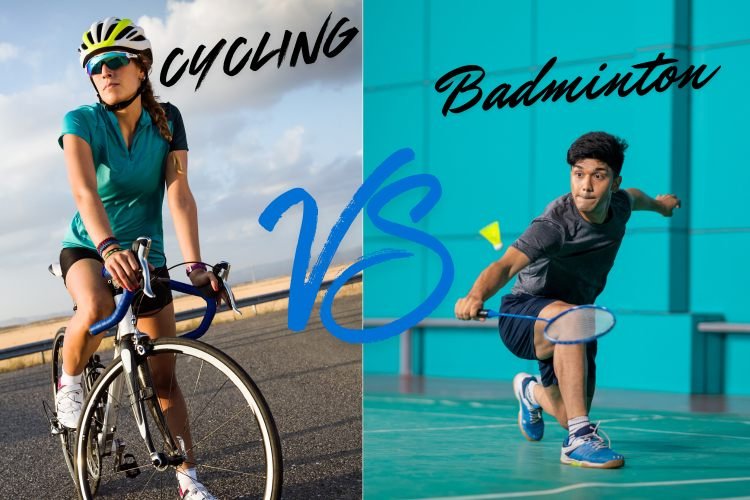 The choice isn't just about how you prefer to sweat; it is a choice about who you want to become at a cellular level. Let us break down exactly what 90 days of this consistent stimulus does to your body.
When comparing the metabolic cost of cycling vs badminton
, the primary differentiator is how your body utilizes energy. Cycling is a masterclass in efficiency and sustained endurance. According to data from Harvard Health Publishing, cycling at a moderate pace (14–15.9 mph) burns roughly 600 to 700 calories per hour for an average adult.
Over a 90-day period, this consistent daily expenditure accumulates to an impressive 54,000 to 63,000 calories burned. Because cycling is typically a steady-state aerobic activity, your body relies primarily on beta-oxidation—the process of breaking down stored body fat using oxygen as fuel.
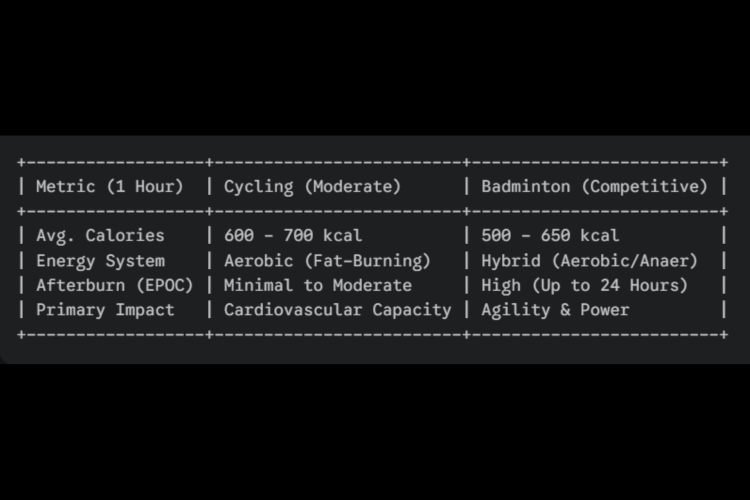
It is inherently a High-Intensity Interval Training (HIIT) sport disguised as a game. An hour of competitive badminton can burn between 500 and 650 calories, but the magic lies in its anaerobic nature. The sudden sprints, overhead smashes, and recovery lunges spike your heart rate up to 80–85% of its maximum.
This triggers a massive Excess Post-Exercise Oxygen Consumption (EPOC) effect, commonly known as the "afterburn."
While a cyclist stops burning calories shortly after dismounting, a badminton player’s metabolic rate remains elevated for hours post-match as the body works to repair muscle tissue and replenish glycogen stores. Structural Transformations: Muscle Sculpting and Joint Impact The architectural changes your musculoskeletal system undergoes by Day 90 will reveal a striking contrast between these two disciplines.
Cycling isolates the lower chassis. Spending 90 hours in the saddle will hyper-target your quadriceps, glutes, hamstrings, and calves. Because cycling is a closed-kinetic-chain exercise, it places zero impact on your skeletal joints. It is highly protective of knee cartilage while simultaneously promoting the secretion of synovial fluid, which lubricates the joints. However, because you are supported by a frame, cycling does very little to improve upper body strength or bone mineral density.
Badminton demands an asymmetrical, multi-directional movement pattern that creates a highly agile, functionally strong physique. The deep lunges build explosive power in the glutes and adductors, while the rapid trunk rotations sculpt the core and obliques.
Skeletal Health Fact:
Because badminton is a weight-bearing sport involving jumps and sudden stops, a landmark study published in the British Journal of Sports Medicine indicates that racket sports significantly boost bone mineral density, offering long-term protection against osteoporosis.
The caveat? The high-impact nature of badminton puts a tax on your ankles, knees, and rotator cuffs, making proper footwear and warm-ups non-negotiable.
Cardiovascular and Cognitive Rewiring By day 90, both activities will significantly optimize your resting heart rate and lower your blood pressure, but they rewire your brain and cardiovascular system via distinct neurological pathways.
Cycling is a form of active meditation. The repetitive, rhythmic cadence of pedaling promotes a flow state, reducing cortisol levels and stimulating the release of neurotrophic factors (like BDNF) that support long-term brain health and memory. It systematically increases your VO2 max (the maximum amount of oxygen your body can utilize during exercise), transforming your heart into a highly efficient, slow-beating pump.
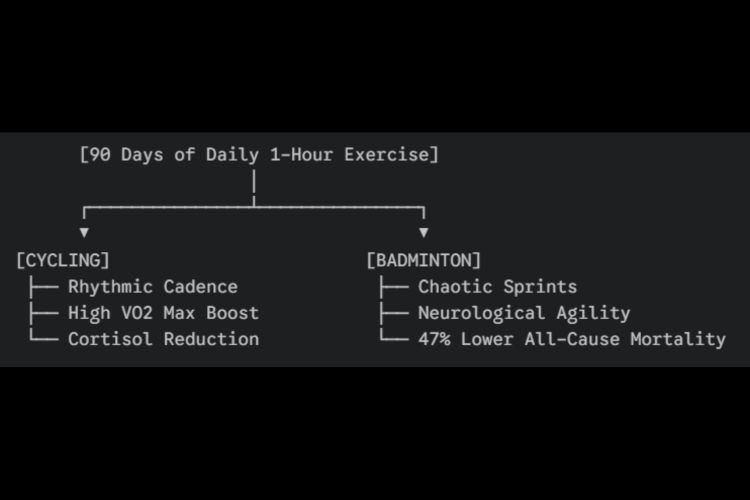 Badminton, conversely, is a high-speed chess match. The shuttlecock can travel at speeds exceeding 200 mph, forcing your brain to calculate trajectory, velocity, and opponent positioning in milliseconds. This sharpens your neuro-muscular pathways, drastically improving hand-eye coordination, spatial awareness, and executive cognitive functioning.
Furthermore, the social, unpredictable nature of a racket sport provides a unique psychological buffer. In fact, a comprehensive cohort study published in the Copenhagen City Heart Study revealed that racket sports like badminton correlate with a staggering 47% reduction in all-cause mortality, outperforming solitary sports by a wide margin due to the combined benefits of high-intensity movement and social connection.
After 90 days and 90 hours of commitment, both paths lead to a vastly superior version of yourself. If your goal is low-impact fat loss, bulletproof knee joints, and an elite cardiovascular gas tank, the bicycle is your ultimate tool. If your priorities lean toward sharp cognitive reflexes, dynamic core strength, bone longevity, and an explosive metabolic afterburn, picking up a racket will deliver those results.
This leaves us with a deeper truth to consider: fitness is not a static destination, but a mirror of our chosen habits. As you look at the next 90 days of your life, ask yourself this:
Are you looking for a sport that allows you to master yourself through steady, rhythmic endurance, or do you need a game that forces you to adapt to chaos in real-time?
Most of us view exercise as a generic prescription for wellness, assuming that any activity will eventually yield the same physical results. But the human body does not adapt to movement generic terms—it reacts precisely to the specific mechanical and metabolic demands placed upon it.
If you commit to an hour a day for 90 days, choosing between a solo endurance sport like cycling or a chaotic, high-intensity racket sport like badminton will reshape your anatomy, your cardiovascular system, and even your brain architecture in profoundly different ways.
The choice isn't just about how you prefer to sweat; it is a choice about who you want to become at a cellular level. Let us break down exactly what 90 days of this consistent stimulus does to your body.The Metabolic Breakdown: Steady Deficit vs. Explosive Burn
When comparing the metabolic cost of cycling vs badminton
, the primary differentiator is how your body utilizes energy. Cycling is a masterclass in efficiency and sustained endurance. According to data from Harvard Health Publishing, cycling at a moderate pace (14–15.9 mph) burns roughly 600 to 700 calories per hour for an average adult.
Over a 90-day period, this consistent daily expenditure accumulates to an impressive 54,000 to 63,000 calories burned. Because cycling is typically a steady-state aerobic activity, your body relies primarily on beta-oxidation—the process of breaking down stored body fat using oxygen as fuel.
Badminton operates on an entirely different physiological spectrum.
It is inherently a High-Intensity Interval Training (HIIT) sport disguised as a game. An hour of competitive badminton can burn between 500 and 650 calories, but the magic lies in its anaerobic nature. The sudden sprints, overhead smashes, and recovery lunges spike your heart rate up to 80–85% of its maximum.
This triggers a massive Excess Post-Exercise Oxygen Consumption (EPOC) effect, commonly known as the "afterburn."
While a cyclist stops burning calories shortly after dismounting, a badminton player’s metabolic rate remains elevated for hours post-match as the body works to repair muscle tissue and replenish glycogen stores. Structural Transformations: Muscle Sculpting and Joint Impact The architectural changes your musculoskeletal system undergoes by Day 90 will reveal a striking contrast between these two disciplines.
The Cyclist's Profile
Cycling isolates the lower chassis. Spending 90 hours in the saddle will hyper-target your quadriceps, glutes, hamstrings, and calves. Because cycling is a closed-kinetic-chain exercise, it places zero impact on your skeletal joints. It is highly protective of knee cartilage while simultaneously promoting the secretion of synovial fluid, which lubricates the joints. However, because you are supported by a frame, cycling does very little to improve upper body strength or bone mineral density.
The Badminton Player's Profile
Badminton demands an asymmetrical, multi-directional movement pattern that creates a highly agile, functionally strong physique. The deep lunges build explosive power in the glutes and adductors, while the rapid trunk rotations sculpt the core and obliques.
Skeletal Health Fact:
Because badminton is a weight-bearing sport involving jumps and sudden stops, a landmark study published in the British Journal of Sports Medicine indicates that racket sports significantly boost bone mineral density, offering long-term protection against osteoporosis.
The caveat? The high-impact nature of badminton puts a tax on your ankles, knees, and rotator cuffs, making proper footwear and warm-ups non-negotiable.
Cardiovascular and Cognitive Rewiring By day 90, both activities will significantly optimize your resting heart rate and lower your blood pressure, but they rewire your brain and cardiovascular system via distinct neurological pathways.
Cycling is a form of active meditation. The repetitive, rhythmic cadence of pedaling promotes a flow state, reducing cortisol levels and stimulating the release of neurotrophic factors (like BDNF) that support long-term brain health and memory. It systematically increases your VO2 max (the maximum amount of oxygen your body can utilize during exercise), transforming your heart into a highly efficient, slow-beating pump.
Badminton, conversely, is a high-speed chess match. The shuttlecock can travel at speeds exceeding 200 mph, forcing your brain to calculate trajectory, velocity, and opponent positioning in milliseconds. This sharpens your neuro-muscular pathways, drastically improving hand-eye coordination, spatial awareness, and executive cognitive functioning.Furthermore, the social, unpredictable nature of a racket sport provides a unique psychological buffer. In fact, a comprehensive cohort study published in the Copenhagen City Heart Study revealed that racket sports like badminton correlate with a staggering 47% reduction in all-cause mortality, outperforming solitary sports by a wide margin due to the combined benefits of high-intensity movement and social connection.
What Does Your Body Truly Need?
After 90 days and 90 hours of commitment, both paths lead to a vastly superior version of yourself. If your goal is low-impact fat loss, bulletproof knee joints, and an elite cardiovascular gas tank, the bicycle is your ultimate tool. If your priorities lean toward sharp cognitive reflexes, dynamic core strength, bone longevity, and an explosive metabolic afterburn, picking up a racket will deliver those results.
This leaves us with a deeper truth to consider: fitness is not a static destination, but a mirror of our chosen habits. As you look at the next 90 days of your life, ask yourself this:
Are you looking for a sport that allows you to master yourself through steady, rhythmic endurance, or do you need a game that forces you to adapt to chaos in real-time?
Copyrights © 2026 Inspiration Unlimited - iU - Online Global Positivity Media
Any facts, figures or references stated here are made by the author & don't reflect the endorsement of iU at all times unless otherwise drafted by official staff at iU. A part [small/large] could be AI generated content at times and it's inevitable today. If you have a feedback particularly with regards to that, feel free to let us know. This article was first published here on 18th May 2026.
Want to Publish About Your Business / Achievements
Get in TOUCH Right Away!

All chats are end-to-end encrypted by WhatsApp and won't be shared anywhere [won't be stored either].


Whether You're A Small Business, Startup or A Professional,
Give Your Brand A Powerful Digital Footprint
That's Loved by Search Engines & AI Engines Equally
For A Price That's Industry Best...☝