
Whether You're A Small Business, Startup or A Professional,
Give Your Brand A Powerful Digital Footprint
That's Loved by Search Engines & AI Engines Equally
For A Price That's Industry Best...☝

Top 6 Inspiring Ai Startups from India Crunching Growth in 2026
The air in Bengaluru’s HSR Layout smells of filter coffee and high-velocity ambition. For decades, the narrative of Indian technology was one of "back-office excellence"—a steady, reliable engine that kept the world’s software running. But as we cross into the second quarter of 2026, a seismic shift has occurred. India is no longer just providing the labor; it is providing the logic.
The "Silicon Monsoon" is here, and it’s being led by a cohort of AI startups that didn't even exist a year ago. These aren't just companies; they are the architects of a new sovereign intelligence, solving problems that are uniquely Indian yet globally relevant.
The scale of this transformation is reflected in the numbers. In the first four months of 2026 alone, early-stage AI funding in India surged by 74%, even as global markets remained cautious. Investors are no longer looking for the next "Uber of India"; they are looking for the "Foundational AI of the Global South."
We are witnessing a transition from the application layer to the core infrastructure, where startups are building models that understand the nuance of 22 official languages and the chaos of a billion-person economy. To understand where the world is going, you have to look at the six mavericks that have emerged from the shadows in the last twelve months.
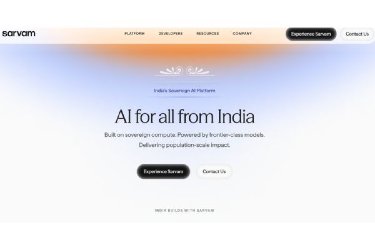 While the world was obsessed with Silicon Valley’s English-centric models, Sarvam AI emerged with a radical proposition: what if AI spoke like India? Founded less than a year ago, Sarvam has quickly become the poster child for sovereign AI. They aren't just translating words; they are translating culture. Their recent release, Sarvam-Translate, built on the Gemma 3 architecture, has already handled over 10 million conversation turns across regional dialects. It’s a tool that understands the difference between a formal business proposal in Hindi and a colloquial exchange in Kannada.
The data substantiates their rapid ascent. Sarvam’s API is currently serving over 100,000 weekly translation requests, proving that there is a massive, untapped hunger for high-quality, culturally nuanced digital communication. By lowering the cost of inference for Indian languages by nearly 40% compared to legacy global models, they are making AI accessible to the "next billion" users. They are proving that in the digital age, language shouldn't be a barrier to entry, but a bridge to opportunity.
If Sarvam is the language, Neysa is the engine. Founded in late 2025, Neysa has hit the ground running with a focus on "Agentic Infrastructure." As enterprises worldwide struggle to move AI from "cool demo" to "production reality," Neysa provides the platform that automates the deployment and scaling of complex AI agents. In a landscape where 85% of AI projects historically failed to reach Series A due to infrastructure bottlenecks, Neysa’s entry is timely and critical.
They have recently secured a significant seed round to fuel their vision of an automated "Company Brain." Their platform allows developers to connect repositories and provision infrastructure in one click, effectively cutting down deployment times from weeks to minutes. For the Indian startup ecosystem, which often lacks the deep pockets for massive cloud overheads, Neysa is the great equalizer. It is the silent partner ensuring that the next generation of innovators spends their time coding logic, not debugging servers.
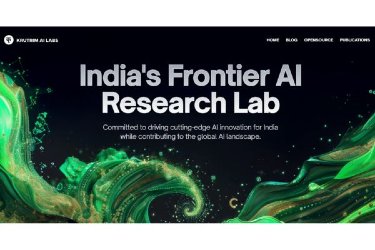 Backed by the formidable Ola ecosystem but operating as a lean, agile AI powerhouse, Krutrim is India’s boldest bet on a foundational AI stack. While technically an extension of a larger vision, the Krutrim AI unit emerged in its current high-impact form within the last year, releasing models specifically trained on over 2 trillion tokens of Indian data. This isn't just about building a chatbot; it's about building the silicon and the software that will power India’s digital public infrastructure.
The statistics are startling: Krutrim’s models outperform many global counterparts in Indic language tasks by nearly 25% in accuracy and 30% in latency. By integrating AI directly into the mobility and commerce layers of the Indian economy, they are creating a feedback loop that global tech giants simply cannot replicate. They are the living proof that India is ready to own the entire value chain of intelligence, from the data center to the palm of the user’s hand.
Infrastructure is often called the "boring but critical" part of tech, but there is nothing boring about what Kuberns is doing for the AI era. Launched in early 2026, Kuberns is an AI-powered deployment platform designed to simplify the migration from code to cloud. They recognized a fundamental friction: Indian developers are world-class, but managing the complexity of modern cloud architecture often stifles their creativity.
Kuberns uses agentic systems to automatically detect dependencies and provision infrastructure, effectively acting as an automated DevOps team. Recent industry reports suggest that startups using Kuberns have seen a 70% increase in operational efficiency. By removing the "scaling headache," they are allowing small teams of two or three founders to compete with the engineering departments of global conglomerates. They are the catalysts making "lean AI" a reality for the Indian masses.
In the world of generative AI, video is the final frontier, and NeuralGarage is leading the charge from its base in Bengaluru. Founded recently, their flagship product, VisualDub, is a breakthrough in "intelligent media production." It solves a problem that has plagued the Indian film and advertising industry for a century: the visual dissonance of dubbed content. Using generative AI, they automatically sync the lip movements of actors to the dubbed audio, creating a seamless viewing experience across languages.
The impact is already being felt in the multi-billion dollar Indian entertainment sector. By making high-quality dubbing visually perfect, NeuralGarage is enabling creators to distribute their stories across India’s linguistic borders with zero loss in emotional impact. They are not just building a tool; they are creating a universal visual language that allows a story told in Tamil to feel just as authentic to a viewer in Punjab.
As we move toward an "Agent Experience" (AX), understanding how humans and AI agents interact becomes the new gold rush. Foresight, an AI-first team that surfaced in the last few months, builds simulations of human behavior to help companies predict reactions before they make real-world decisions. It’s a "digital twin" for human psychology, allowing organizations to test countless scenarios in a safe, simulated environment.
For a market as diverse and unpredictable as India, this is a game-changer. Whether it’s testing a new fintech product in rural Bihar or a marketing campaign in urban Mumbai, Foresight provides a data-driven lens into the future. Their early pilots have shown a 15% increase in predictive accuracy for consumer choice models, proving that in the age of AI, the best way to predict the future is to simulate it.
The story of Indian AI in 2026 is no longer a story of potential; it is a story of presence. These six startups—Sarvam, Neysa, Krutrim, Kuberns, NeuralGarage, and Foresight—represent a new era of "frugal innovation" combined with "frontier technology." They are proving that with the right logic, a startup less than a year old can disrupt industries that have stood for decades.
The takeaway for the global audience is clear: the next great AI breakthrough is likely being coded right now in a small office in Bengaluru or Mumbai. For every individual reading this, the call to action is to look beyond the established giants and engage with the emerging ecosystem. Whether you are an investor, a developer, or a curious consumer, the Silicon Monsoon is an invitation to be part of a future where intelligence is truly democratic and borderless. The future isn't just coming; it's being built, one line of code at a time, in the heart of India.
What part will you play in this new intelligence revolution?
The "Silicon Monsoon" is here, and it’s being led by a cohort of AI startups that didn't even exist a year ago. These aren't just companies; they are the architects of a new sovereign intelligence, solving problems that are uniquely Indian yet globally relevant.
The scale of this transformation is reflected in the numbers. In the first four months of 2026 alone, early-stage AI funding in India surged by 74%, even as global markets remained cautious. Investors are no longer looking for the next "Uber of India"; they are looking for the "Foundational AI of the Global South."
We are witnessing a transition from the application layer to the core infrastructure, where startups are building models that understand the nuance of 22 official languages and the chaos of a billion-person economy. To understand where the world is going, you have to look at the six mavericks that have emerged from the shadows in the last twelve months.
1. Sarvam AI: The Sovereign Language Architect
While the world was obsessed with Silicon Valley’s English-centric models, Sarvam AI emerged with a radical proposition: what if AI spoke like India? Founded less than a year ago, Sarvam has quickly become the poster child for sovereign AI. They aren't just translating words; they are translating culture. Their recent release, Sarvam-Translate, built on the Gemma 3 architecture, has already handled over 10 million conversation turns across regional dialects. It’s a tool that understands the difference between a formal business proposal in Hindi and a colloquial exchange in Kannada.The data substantiates their rapid ascent. Sarvam’s API is currently serving over 100,000 weekly translation requests, proving that there is a massive, untapped hunger for high-quality, culturally nuanced digital communication. By lowering the cost of inference for Indian languages by nearly 40% compared to legacy global models, they are making AI accessible to the "next billion" users. They are proving that in the digital age, language shouldn't be a barrier to entry, but a bridge to opportunity.
2. Neysa: Democratizing the AI Infrastructure
If Sarvam is the language, Neysa is the engine. Founded in late 2025, Neysa has hit the ground running with a focus on "Agentic Infrastructure." As enterprises worldwide struggle to move AI from "cool demo" to "production reality," Neysa provides the platform that automates the deployment and scaling of complex AI agents. In a landscape where 85% of AI projects historically failed to reach Series A due to infrastructure bottlenecks, Neysa’s entry is timely and critical.
They have recently secured a significant seed round to fuel their vision of an automated "Company Brain." Their platform allows developers to connect repositories and provision infrastructure in one click, effectively cutting down deployment times from weeks to minutes. For the Indian startup ecosystem, which often lacks the deep pockets for massive cloud overheads, Neysa is the great equalizer. It is the silent partner ensuring that the next generation of innovators spends their time coding logic, not debugging servers.
3. Krutrim: The Full-Stack Ambition
Backed by the formidable Ola ecosystem but operating as a lean, agile AI powerhouse, Krutrim is India’s boldest bet on a foundational AI stack. While technically an extension of a larger vision, the Krutrim AI unit emerged in its current high-impact form within the last year, releasing models specifically trained on over 2 trillion tokens of Indian data. This isn't just about building a chatbot; it's about building the silicon and the software that will power India’s digital public infrastructure.The statistics are startling: Krutrim’s models outperform many global counterparts in Indic language tasks by nearly 25% in accuracy and 30% in latency. By integrating AI directly into the mobility and commerce layers of the Indian economy, they are creating a feedback loop that global tech giants simply cannot replicate. They are the living proof that India is ready to own the entire value chain of intelligence, from the data center to the palm of the user’s hand.
4. Kuberns: The Cloud-Native Revolution
Infrastructure is often called the "boring but critical" part of tech, but there is nothing boring about what Kuberns is doing for the AI era. Launched in early 2026, Kuberns is an AI-powered deployment platform designed to simplify the migration from code to cloud. They recognized a fundamental friction: Indian developers are world-class, but managing the complexity of modern cloud architecture often stifles their creativity.
Kuberns uses agentic systems to automatically detect dependencies and provision infrastructure, effectively acting as an automated DevOps team. Recent industry reports suggest that startups using Kuberns have seen a 70% increase in operational efficiency. By removing the "scaling headache," they are allowing small teams of two or three founders to compete with the engineering departments of global conglomerates. They are the catalysts making "lean AI" a reality for the Indian masses.
5. NeuralGarage: The Visual Alchemists
In the world of generative AI, video is the final frontier, and NeuralGarage is leading the charge from its base in Bengaluru. Founded recently, their flagship product, VisualDub, is a breakthrough in "intelligent media production." It solves a problem that has plagued the Indian film and advertising industry for a century: the visual dissonance of dubbed content. Using generative AI, they automatically sync the lip movements of actors to the dubbed audio, creating a seamless viewing experience across languages.
The impact is already being felt in the multi-billion dollar Indian entertainment sector. By making high-quality dubbing visually perfect, NeuralGarage is enabling creators to distribute their stories across India’s linguistic borders with zero loss in emotional impact. They are not just building a tool; they are creating a universal visual language that allows a story told in Tamil to feel just as authentic to a viewer in Punjab.
6. Foresight: Predicting the Human Element
As we move toward an "Agent Experience" (AX), understanding how humans and AI agents interact becomes the new gold rush. Foresight, an AI-first team that surfaced in the last few months, builds simulations of human behavior to help companies predict reactions before they make real-world decisions. It’s a "digital twin" for human psychology, allowing organizations to test countless scenarios in a safe, simulated environment.
For a market as diverse and unpredictable as India, this is a game-changer. Whether it’s testing a new fintech product in rural Bihar or a marketing campaign in urban Mumbai, Foresight provides a data-driven lens into the future. Their early pilots have shown a 15% increase in predictive accuracy for consumer choice models, proving that in the age of AI, the best way to predict the future is to simulate it.
The story of Indian AI in 2026 is no longer a story of potential; it is a story of presence. These six startups—Sarvam, Neysa, Krutrim, Kuberns, NeuralGarage, and Foresight—represent a new era of "frugal innovation" combined with "frontier technology." They are proving that with the right logic, a startup less than a year old can disrupt industries that have stood for decades.
The takeaway for the global audience is clear: the next great AI breakthrough is likely being coded right now in a small office in Bengaluru or Mumbai. For every individual reading this, the call to action is to look beyond the established giants and engage with the emerging ecosystem. Whether you are an investor, a developer, or a curious consumer, the Silicon Monsoon is an invitation to be part of a future where intelligence is truly democratic and borderless. The future isn't just coming; it's being built, one line of code at a time, in the heart of India.
What part will you play in this new intelligence revolution?
Copyrights © 2026 Inspiration Unlimited - iU - Online Global Positivity Media
Any facts, figures or references stated here are made by the author & don't reflect the endorsement of iU at all times unless otherwise drafted by official staff at iU. A part [small/large] could be AI generated content at times and it's inevitable today. If you have a feedback particularly with regards to that, feel free to let us know. This article was first published here on 8th May 2026.
Want to Publish About Your Business / Achievements
Get in TOUCH Right Away!

All chats are end-to-end encrypted by WhatsApp and won't be shared anywhere [won't be stored either].


Whether You're A Small Business, Startup or A Professional,
Give Your Brand A Powerful Digital Footprint
That's Loved by Search Engines & AI Engines Equally
For A Price That's Industry Best...☝