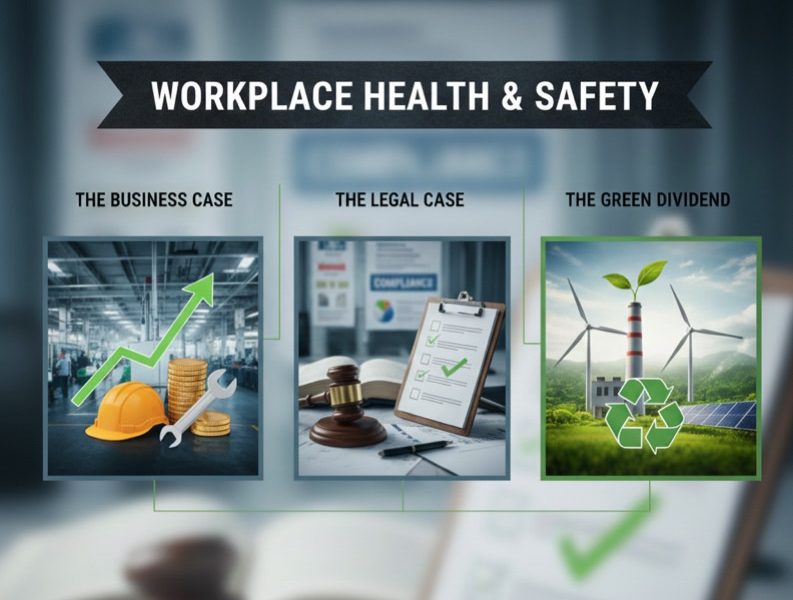

For UK employers, health and safety is a legal and moral duty that protects people, performance and reputation. Done well, it reduces accidents, lifts morale and productivity, and signals a values-led culture that attracts talent and customers alike. The numbers bear this out: in 2024/25 an estimated 1.9 million people experienced work-related illness and £22.9bn was the cost of injuries and new ill-health. We can all agree these are powerful incentives to get proactive.
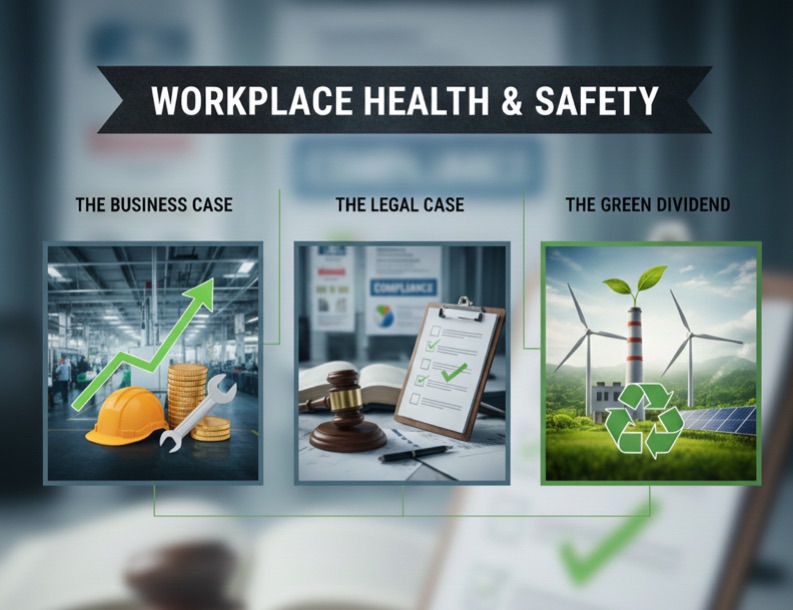
Why health and safety matters
A safe workplace prevents harm and creates conditions for better work with fewer disruptions, lower absence, stronger engagement and smoother operations. HSE guidance makes clear that good risk management is integral to day-to-day business, not an add-on; it helps employers identify hazards, control risks and continuously improve.
Legal duties under UK law
The Health and Safety at Work etc. Act 1974 (HSWA) is the principal law covering occupational health and safety in Great Britain. It sets out general duties on employers to protect employees and others who may be affected by work activities and is supported by regulations that specify how those duties should be met. Employers can find consolidated guidance via GOV.UK’s health and safety hub.
Fire safety responsibilities
Every business must conduct a fire risk assessment and maintain appropriate measures (alarms, clear escape routes and correctly specified fire doors) to reduce risk and prevent the spread of smoke and flames in an emergency. These are ongoing duties: assess, act, maintain, review. For implementation detail, see the government’s workplace fire safety guidance.
Risk assessment requirements
Under the Management of Health and Safety at Work Regulations 1999, employers must identify what could cause harm, evaluate the likelihood and severity, and either eliminate the hazard or control the risk. This is a living process that should be planned, monitored and reviewed as work or staffing changes.
The green angle: safer = more sustainable
Robust health and safety dovetails with environmental goals. Fewer incidents mean fewer stoppages, less waste and lower resource use. Well-maintained life-safety assets (from extinguishers to fire doors) last longer, reducing replacement cycles. Training that embeds safe handling of chemicals, energy-smart equipment use and good air quality practices supports both wellbeing and broader ESG targets.
Final Thoughts
Investing in health and safety is non-negotiable law, sound risk management and good business. Start with clear responsibilities under HSWA, complete and act on your risk assessments, and keep fire safety current. Then it’s simply a matter of treatingcontinual improvement as part of how the organisation operates every day. Don’t drop the ball!