The air in Bengaluru’s HSR Layout is no longer just filled with the aroma of filter coffee and the hum of electric scooters; it is thick with the electricity of a silent, digital revolution. As we move deeper into 2026, the narrative of “India as the world’s back office” has been permanently deleted, replaced by a high-definition story of “India as the world’s AI laboratory.”
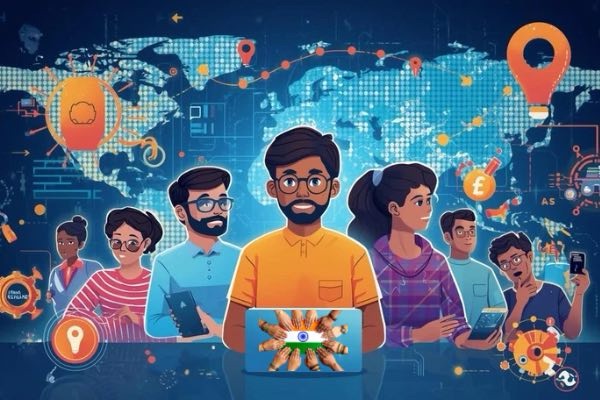
In the last year alone, India’s AI market valuation surged past $13 billion, but the real story isn’t in the billions—it’s in the APIs. Specifically, the ChatGPT API has become the foundational clay for a new generation of Indian “Mavericks” who are building solutions that don’t just mimic Western tech, but solve problems at a “Bharat” scale.
The shift is palpable: India now ranks second globally in public generative AI projects on GitHub, and the speed at which local startups are integrating Large Language Models (LLMs) is nothing short of breathtaking. From the corridors of Mumbai’s financial hubs to the agritech labs in Chandigarh, the API of ChatGPT is being localized, sanitized, and humanized to speak the languages of 1.4 billion people. This isn’t just about code; it’s about a nation finally finding its digital voice in a world that was once dominated by a single linguistic syntax.
The New Guard: 20 Apps and Startups Redefining the Indian Landscape
The emergence of these startups is not a happy accident; it is the result of a deliberate “frugal innovation” mindset where the high costs of building a foundation model are bypassed by the genius of fine-tuning and specialized application.
1. Sarvam AI: The Linguistic Architect
Sarvam AI isn’t just building a chatbot; they are building a bridge for the 90% of Indians who don’t speak English as their primary language. By leveraging OpenAI’s infrastructure and fine-tuning it for Indian dialects, they are ensuring that a farmer in rural Karnataka can interact with complex technology as easily as a techie in Silicon Valley. Their mission is clear: to make AI a fundamental right, not a linguistic privilege.
2. Yellow.ai: The Customer Experience Titan
Moving beyond simple customer service, Yellow.ai has integrated ChatGPT’s reasoning capabilities to create “Agentic AI.” These aren’t just bots that answer FAQs; they are autonomous agents that can resolve complex insurance claims or book multi-leg travel itineraries in over 135 languages. With a 25.6% CAGR in the conversational AI market, Yellow.ai is proving that Indian enterprises are ready to lead the global customer engagement shift.
3. Qure.ai: The Lifesaver in a Box
In the high-stakes world of healthcare, Qure.ai uses generative AI to interpret X-rays and CT scans with a speed and accuracy that was once the stuff of science fiction. By integrating LLMs to summarize clinical findings and suggest triage pathways, they are helping overburdened Indian radiologists manage a patient load that is often ten times the global average. Data shows that their intervention can reduce the time-to-treatment for strokes by nearly 50%.
4. Haptik: The Commerce Conversationalist
Haptik has pivoted from simple chat to “Generative Commerce.” By utilizing the ChatGPT API, they allow users to shop on WhatsApp through a fluid, natural conversation. No more clunky menus or search bars; you simply tell the bot what you need for your sister’s wedding, and it curates, suggests, and completes the transaction. It is the ultimate manifestation of the “content-to-commerce” dream.
5. Krutrim: The Sovereign Cloud
While technically building their own base, Ola’s Krutrim uses OpenAI’s API standards to ensure seamless integration for Indian developers. Their “Sovereign AI” stack is designed for the Indian regulatory environment, ensuring that data residency and cultural nuances are baked into every prompt. They are essentially building the “digital soil” upon which thousands of other startups will grow.
6. Babble Bots AI: The Recruiter Who Never Sleeps
Hiring in a country with millions of applicants is a nightmare—unless you have Babble Bots. This startup uses the ChatGPT API to conduct initial voice interviews, assessing not just technical skills but also soft skills and cultural fit. They have effectively reduced the “time-to-hire” for major Indian IT firms by over 60%, turning a month-long process into a matter of days.

7. Arya.ai: The Financial Fortress
In the world of Fintech, trust is the only currency that matters. Arya.ai uses generative models to detect fraud in real-time, analyzing patterns that human eyes—and even traditional algorithms—might miss. By processing millions of transactions through LLM-driven risk assessments, they are securing the digital wallets of a new generation of Indian investors.
8. Embibe: The Personal Tutor for Every Child
Education in India is often a race, but Embibe is turning it into a journey. Their AI-driven platform uses ChatGPT’s API to create personalized learning paths for students, explaining complex physics concepts through metaphors that resonate with an Indian teenager’s daily life. It is “democratized excellence” at scale, reaching students in towns that don’t even appear on most global maps.
9. Neural Garage: The Multilingual Storyteller
Ever watched a dubbed movie where the lips don’t match the words? Neural Garage’s “VisualDub” uses generative AI to sync facial expressions with translated audio. By leveraging LLMs for context-aware translation and visual synthesis, they are helping Indian content creators go global without the “uncanny valley” effect, making regional cinema a worldwide phenomenon.
10. AgNext: The Farmer’s Quality Inspector
Agriculture remains the backbone of India, and AgNext is giving it a digital spine. Using AI-powered food grading, they allow farmers to get instant, fair pricing for their crops based on objective data rather than a middleman’s whim. Their integration of generative AI helps in generating “Quality Reports” that are understood by global buyers, opening up international markets for the Indian farmer.
Scaling the Unscalable: The Data Behind the Dream
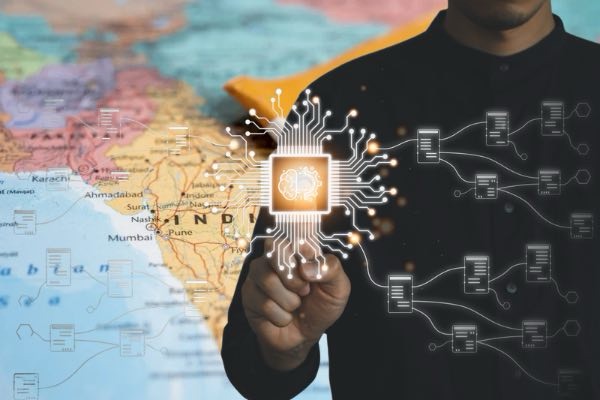
The success of these companies is supported by a robust macroeconomic framework. According to recent reports from the India AI Impact Summit 2026, the demand for AI skills in India is growing 75% faster than for non-AI roles. This isn’t just a bubble; it is a structural shift in the labor market. Large enterprises in India now account for 63.2% of the AI market, but the fastest growth is being seen in SMEs that are using “plug-and-play” API solutions to compete with giants.
The government’s ₹1 lakh crore Research Development and Innovation Fund is the fuel for this engine. By providing the infrastructure—like the 38,000 GPUs recently acquired by the state—India is ensuring that its “API Mavericks” have the compute power to match their ambition. We are seeing a transition from “capital positive” to “capital adequacy,” where the focus is no longer just on surviving, but on dominating the global IP landscape.
The Cultural Impact: AI with an Indian Heart
What truly sets these Indian startups apart is their “frugal intelligence.” While Silicon Valley builds models that require massive energy, Indian developers are focused on “inclusive AI.” This means building apps that work on low-bandwidth 5G connections and older smartphones. It is an AI that understands the difference between a “formal request” and a “respectful plea” in a dozen different languages.
As we look at the remaining 10 rising stars—companies like SigTuple (AI Pathology), Stylumia (Fashion Intelligence), Locus (Logistics Optimization), Niramai (Non-invasive Breast Cancer Detection), Rezo.ai(Contact Center Transformation), Gnani.ai (Speech-to-Text for 22+ languages), Soket AI (Model Optimization), Zenteiq (Engineering Simulations), Gan.ai (Personalized Video Marketing), and Avataar (3D Generative E-commerce)—a pattern emerges. They are not trying to be the next Google; they are trying to be the first them. They are solving the “unsolved” problems of the global south using the most advanced tools of the north. Read the article with detailed insights on these 10 apps here.
The Takeaway: Your Role in the AI Century
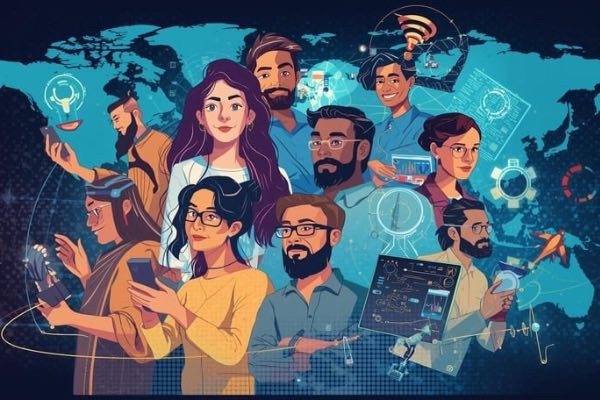
The story of India’s AI traction is more than just a list of apps; it is a testament to the power of human ingenuity when it meets a limitless API. The “Indian Way” of AI is about empathy, accessibility, and an obsessive focus on solving real-world problems. Whether you are an entrepreneur looking for the next big gap, or a professional looking to upskill, the message is clear: the barrier to entry has never been lower, and the potential impact has never been higher.
As these 20 startups prove, the “Next Big Thing” isn’t going to be a piece of software you use; it’s going to be the way software understands you.
We are no longer just users of technology; we are its co-architects. The question is no longer if AI will change India, but how you will use this Indian-born innovation to change your world.