There is a truth about humanity that is both humbling and powerful.
A truth that quietly dissolves divisions.
A truth that science has been uncovering, layer by layer, over the past few decades.
If we trace our lineage far enough — beyond nations, beyond languages, beyond cultures — we arrive at a simple, undeniable realization:
We are not separate.
We are connected.
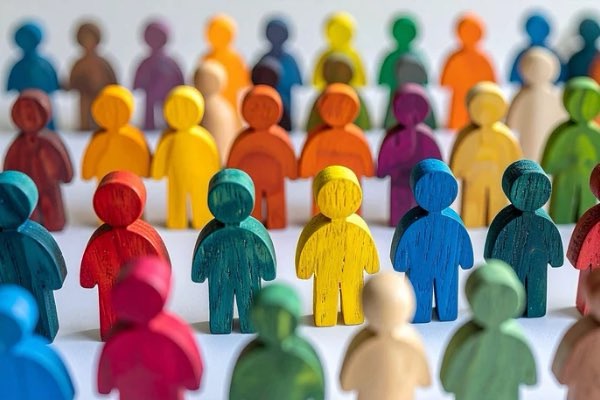
And if we go back thousands of years — roughly 7,000 to 10,000 years and beyond — the lines that seem to divide us today begin to blur into one shared human story.
The Science That Brought Us Closer
Modern genetic research has revolutionized our understanding of human ancestry.
The Human Genome Project, completed in the early 2000s, revealed something extraordinary: all humans share approximately 99.9% of their DNA. That means the genetic difference between any two individuals on Earth is just 0.1%.
Think about that.
Across continents, races, languages, and appearances — the biological blueprint that defines us is almost identical.
Further studies in population genetics have shown that if we trace human lineage backward, we converge into smaller ancestral groups. Concepts like “Most Recent Common Ancestor (MRCA)” suggest that all living humans today share common ancestors who lived just a few thousand years ago.
Research indicates that:
- A common genealogical ancestor for all humans may have lived as recently as 3,000–5,000 years ago
- Going further back, all modern humans trace their origins to populations in Africa around 200,000–300,000 years ago
- Migration patterns over millennia interconnected populations across the globe
What this means is simple, yet profound.
The further back you go, the more connected we become.
From Tribes to One Human Story
In ancient times, humans lived in small groups — tribes, communities, early civilizations. Over generations, these groups migrated, mixed, and evolved.
Borders did not exist then.
Passports did not define identity.
Differences were not institutionalized.
Humanity moved, adapted, and grew — together.
Over thousands of years, cultures diversified, languages formed, and identities became more localized. But genetically, the separation was never as deep as it appeared socially.
We built differences faster than biology ever could.
The Illusion of Separation
Modern society often emphasizes differences.
Nationality.
Religion.
Ethnicity.
Language.
These identities are real and meaningful — but they are not fundamental to our biological existence.
They are layers.
Beneath these layers lies a shared structure.
A shared ancestry.
A shared origin.
The idea that we are fundamentally different from one another begins to lose strength when placed against genetic reality.
Because science does not see borders.
It sees continuity.
We Are One Unit — By Design and By Necessity

If we look beyond biology and into systems — environmental, economic, technological — the truth becomes even clearer.
We are not just connected by ancestry.
We are connected by survival.
Climate change in one region affects the entire planet.
Economic shifts in one country ripple across global markets.
Technological advancements in one part of the world influence lives everywhere.
Humanity today functions as an interconnected system.
A single unit.
Not by choice alone — but by necessity.
And perhaps, by design.
Why Harmony Is Not Optional Anymore
In earlier centuries, societies could function in relative isolation.
Today, that is no longer possible.
Our challenges are shared:
- Environmental sustainability
- Global health
- Economic stability
- Technological ethics
These are not local problems.
They are collective responsibilities.
And collective responsibility requires collective thinking.
Harmony is no longer an idealistic concept.
It is a practical requirement.
Because in an interconnected world, conflict does not remain contained. It spreads. It disrupts. It affects all.
Just as cooperation does.
What Genetic Research Is Teaching Us Beyond Biology
The implications of genetic research go beyond science.
They challenge perspective.
If all humans are nearly identical at a genetic level, then many of the divisions we hold onto begin to feel less absolute.
They become negotiable.
They become contextual.
They become human-made.
And what is human-made can also be redefined.
This does not mean erasing identity.
It means expanding it.
From “me” to “us.”
From “mine” to “ours.”
The Future of Gene Research and Human Understanding
Genetic research is advancing rapidly.
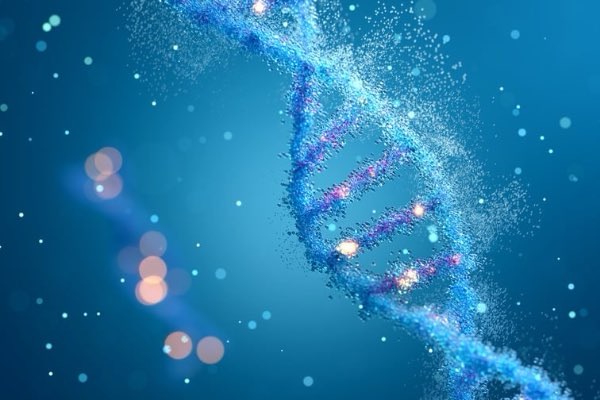
Technologies like genome sequencing, CRISPR gene editing, and personalized medicine are unlocking deeper insights into human biology.
In the coming decades, we may see:
- More precise understanding of ancestry and migration patterns
- Early detection and prevention of genetic diseases
- Personalized healthcare based on individual genetic profiles
- Deeper mapping of how human populations evolved and interconnected
But beyond these advancements lies a philosophical shift.
As we understand our genetic closeness more deeply, the narrative of human separation may begin to weaken.
Science may do what philosophy has attempted for centuries — remind us that we are fundamentally one.
A Perspective Worth Reflecting On
At a deeper level, this realization invites a question.
If we are all connected — genetically, historically, and systemically — then how should we live?
How should we treat one another?
How should we build societies?
Because if humanity is one extended family, then conflict is not just disagreement.
It is internal friction.
And harmony is not just peace.
It is alignment.
The Shift From Awareness to Action
Understanding this truth is one step.
Living it is another.
It reflects in small ways:
- How we speak about others
- How we respond to differences
- How we make decisions that affect more than just ourselves
It reflects in larger ways:
- Policies that prioritize collective well-being
- Innovations that solve shared problems
- Leadership that thinks beyond borders
The idea that “we are one” is not abstract.
It is actionable.
A Final Thought
Humanity has spent centuries defining differences.
Perhaps the next phase is about recognizing connections.
Science has already shown us the path.
We share nearly all of our DNA.
We share ancestors.
We share a planet.
We share a future.
Whether we like it or not, we are part of the same story.
One family.
One system.
One unit.
And the sooner we begin to live with that awareness, the more aligned — and perhaps the more peaceful — our world can become.
Because the truth is not something we need to create.
It is something we need to remember.