
There comes a moment in every journey when passion matures into purpose. In everyone’s life atleast at one point you feel like devoting your time to this that matter most to you, over the ones that just need your presence.
For some, it happens through lived experience. For others, through observation of inequality, opportunity, and untapped potential. And for a few, it emerges quietly — through the realization that growth without responsibility feels incomplete.
Hi! I am Sujit Lalwani, the editor of iU & InspiNews. My work has somehow aligned deeply with six Sustainable Development Goals: Zero Hunger, Good Health and Well-Being, Quality Education, Decent Work and Economic Growth, Reduced Inequalities, and Responsible Consumption and Production.
These are not just global policy frameworks. They are human realities. They are everyday struggles. They are opportunities waiting for participation.
And the beauty of the SDGs is this: no contribution is too small.
SDG 2 – Zero Hunger: Beyond Food, Toward Dignity
Hunger is not merely the absence of food. It is the absence of security. Several millions sleep without a meal every single day.
Globally, millions still face food insecurity, and even in developing economies, malnutrition remains a quiet crisis. Hunger weakens education outcomes, productivity, immunity, and long-term economic mobility.
Working toward Zero Hunger means thinking beyond charity.
It means supporting local farmers. Reducing food waste. Creating systems that ensure surplus reaches scarcity. Educating communities on nutrition, not just calories.
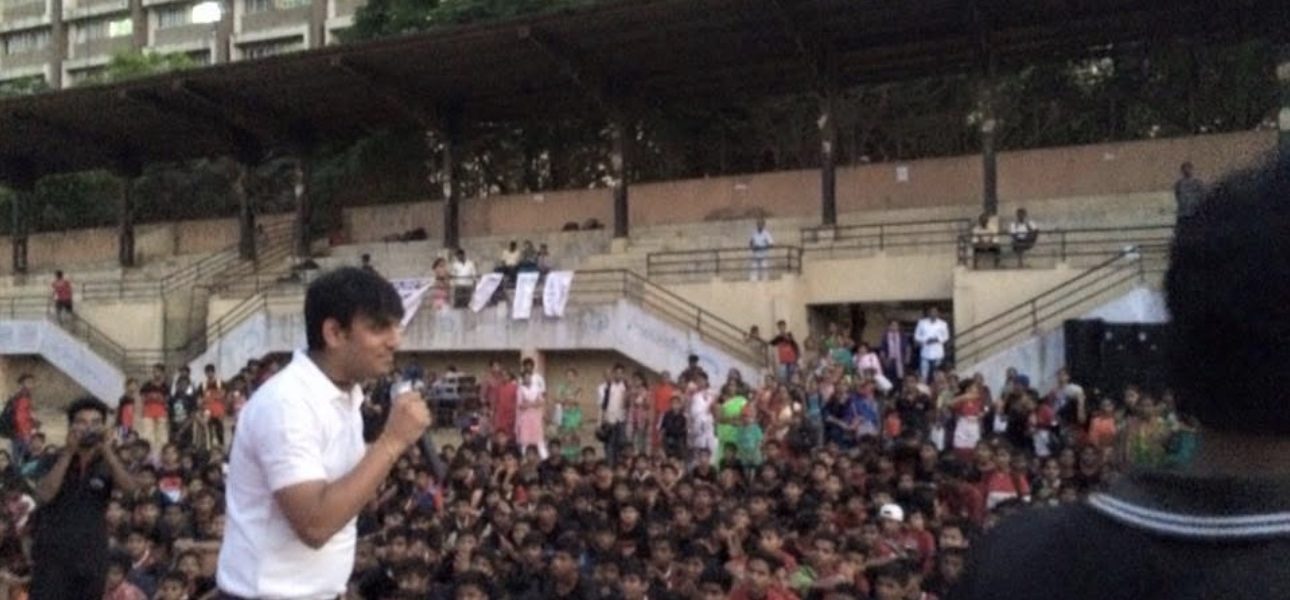
Anyone can contribute. Hence, I started 36meals.com an initiative that inspires people to not waste food and believes in advocating for “prevention of food wastage”. We have reached 100s of 1000s of people with this reminder through talks, workshops, posters, posts, digital presence and offline collaborations. Everybody can participate merely by pledging.
Ofcourse there are more ways. You could Support food redistribution initiatives. Avoid food wastage at events. Volunteer with meal programs. Advocate for sustainable agriculture practices. Encourage community kitchens.
Ending hunger is not about feeding today alone. It is about building systems that prevent hunger tomorrow.
SDG 3 – Good Health and Well-Being: A Foundation for Everything
Health is not a luxury. It is the foundation of human potential.
A society cannot innovate, educate, or grow economically if its people are physically and mentally unwell. Health includes preventive care, mental health awareness, fitness, sanitation, and access to affordable treatment.
My passion lies in promoting habits that sustain health — because prevention is more powerful than cure. We have taken extra care to keep personal wellness and better health as a focus topic in iuemag.com throughout our journey of 12 years of publication.
Meanwhile, Individuals can contribute by prioritizing personal health, encouraging wellness conversations, supporting mental health initiatives, promoting active lifestyles, and advocating for community health awareness.
A healthier society is a stronger society.
SDG 4 – Quality Education: Unlocking Human Potential
Education is the multiplier.
It transforms poverty into possibility. It converts curiosity into capability. It bridges generational divides.
Quality education is not only about literacy. It is about relevance, accessibility, and lifelong learning. In an AI-driven world, education must continuously evolve.
Anyone can contribute by mentoring students, supporting scholarships, sharing knowledge freely, promoting digital literacy, and encouraging skill development in underserved communities. I started a platform called i3. We did several successful conferences, inspiring people towards greater and greater impact and better life education.
Education does not just change individuals. It changes trajectories. We saw trajectories change and evolve into greater and greater standards.
SDG 8 – Decent Work and Economic Growth: Dignity Through Opportunity
Economic growth without dignity is hollow.
Decent work means fair wages, safe conditions, skill growth, and opportunity without exploitation. It means entrepreneurship ecosystems that allow small businesses to thrive. It means inclusive digital economies.
When people have meaningful work, they gain more than income — they gain identity and stability. I have been closely involved in influencing career trajectories for less fortunate & also helping people partner opportunities that are meant for them, that have helped them scale to greater heights employing several 100 people today.
Supporting local businesses, mentoring entrepreneurs, promoting ethical workplaces, investing in skill development, and fostering innovation ecosystems are powerful individual contributions.
Economic growth must be inclusive to be sustainable.
SDG 10 – Reduced Inequalities: Bridging Visible and Invisible Gaps
Inequality is not always loud. Often, it is silent and systemic.
Access to opportunity varies by geography, gender, socio-economic background, and education. Reduced inequalities means ensuring that growth does not benefit only a few.
It means digital inclusion. Financial inclusion. Representation. Accessibility. I have had teams from all strata, age groups, professional backgrounds and economic backgrounds volunteer for change and impact. It inspired inclusiveness and team work bridging gaps for many in many ways.
Individuals can contribute by advocating fairness in hiring, supporting diverse voices, mentoring underrepresented communities, and designing businesses that serve broader audiences.
Equality is not sameness. It is access.
SDG 12 – Responsible Consumption and Production: The Power of Conscious Choices
Every purchase is a vote.
Responsible consumption asks us to reflect: where does this come from? Who made it? What impact does it leave behind?
Production must align with sustainability — reducing waste, conserving resources, and minimizing environmental harm.
Individuals contribute by choosing sustainable brands, reducing waste, reusing materials, recycling responsibly, and supporting businesses that operate ethically.
Responsible choices compound. Reusing and promoting circular economy and its benefits has been my key area.
The Larger Vision: Impact as Identity
The SDGs are not checkboxes. They are a compass.
Choosing to align with them is choosing to operate beyond self-interest. It is recognizing that prosperity disconnected from collective well-being is incomplete.
What inspires me most is this: these goals are interconnected. Each one impacts the other. These 6 are my areas of impact and work.
Education reduces inequality.
Good health supports economic productivity.
Responsible production supports environmental stability.
Economic growth reduces hunger.
Impact is not isolated. It is systemic.
How Anyone Can Begin Today
You do not need to run a foundation to contribute. You do not need global influence.
You need awareness and intention.
Start with daily choices. Support one initiative. Mentor one person. Reduce one harmful habit. Promote one sustainable practice. Recognise the impact of another.
Small actions, when multiplied across millions, become transformation. If you know of anyone working on making a difference in the society, getting them recognised on platforms like InspiNews is a great start to build on the impact. It will be my pleasure to see those stories go live.
The SDGs are not distant international goals. They are local responsibilities.
A Final Reflection
The world does not change through declarations alone.
It changes through aligned actions.
Choosing to work toward Zero Hunger, Health, Education, Decent Work, Reduced Inequalities, and Responsible Consumption is not just professional alignment — it is personal conviction.
Impact is not about scale at the beginning.
It is about sincerity.
And when sincerity sustains effort long enough, scale follows.
The future is not built by governments alone.
It is built by citizens who decide to care.
The question is not whether we can contribute.
The question is whether we will.
I’m a big believer of Individual Social Responsibility (ISR) coined by me, during my Rotary National Convention speech in 2015. It is each of our responsibility to contribute towards uplifting the society that gives us everything we need, facilitates our life and enables our quality of life.