India’s 2026 Union Budget: Vision, Values and the Road Ahead — A Strategic Narrative of Growth, Equity and Resilience

When Finance Minister Nirmala Sitharaman stood in Parliament on 1 February 2026 to present India’s Union Budget for 2026-27, she did more than tabulate numbers.
What she offered was a philosophy of governance — a belief that a large, diverse nation can pursue high-growth and social inclusion side by side, even in a world marked by uncertainty and shifting global power dynamics.
This post-Budget vision, later elaborated in the press conference that followed, is an invitation to look beyond fiscal arithmetic and understand India’s economic narrative as one woven with ambition, pragmatism and responsibility.
Across the halls of Parliament and onto the pages of subsequent analysis, the 2026 Budget is shaping up to be remembered as a Budget of continuity and boldness.
It carries forward structural reforms, balances fiscal prudence with strategic investment, and underscores a long-term vision anchored in inclusive development. Here, in richly textured form, is what this pivotal budget aims to accomplish — and why it matters not just in numbers, but in the lives of people and the arc of India’s future.
A Budget Inspired by Duty and Purpose
What distinguishes the 2026 Union Budget from many that preceded it is its articulation of underlying principles, summarized by the concept of three “kartavyas” or duties. The government defined the first duty as accelerating and sustaining economic growth by strengthening productivity, competitiveness and resilience in the face of global volatility.
The second was to translate aspirations of people into capabilities — nurturing skills, opportunities and participation across society. The third duty focused on equitable access to resources and opportunities, ensuring that every family, community and region could meaningfully contribute to and benefit from national progress.
This framing is not just rhetorical. It reflects an important philosophical shift — from seeing budgets as annual spending exercises to viewing them as instruments of structural transformation, where economic policies intersect with social aspirations.
The Numbers That Define a Nation’s Priorities
Numbers provide the backdrop to India’s economic ambitions. In the 2026-27 budget estimates, the government projected total expenditure at ₹53.5 lakh crore, supported by non-debt receipts of ₹36.5 lakh crore, while net tax receipts were pegged at ₹28.7 lakh crore. Gross market borrowings were estimated at ₹17.2 lakh crore, against a fiscal deficit target of 4.3 percent of GDP.
India also anticipated a debt-to-GDP ratio of 55.6 percent. These figures — while technical — reveal a balancing act between fiscal responsibility and strategic investment. The government aims to sustain momentum without unduly straining public finances.
These targets reflect discipline and direction. Compared with recent global norms, a fiscal deficit of 4.3 percent signals both ambition and restraint — reinforcing that the state will not subsidize growth solely through debt, yet will not retreat from strategic spending.
A Record Push for Infrastructure and Connectivity
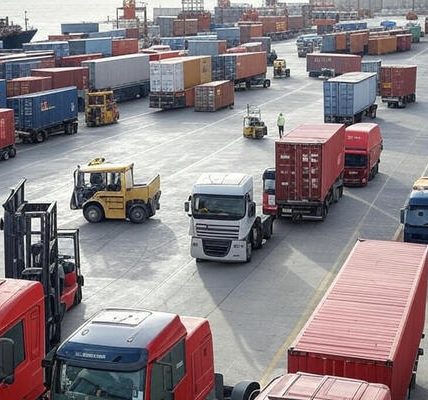
Among the most consequential moves in the 2026 Budget is the increase in capital expenditure to a record ₹12.2 lakh crore for the fiscal year. Such infrastructure spending is not an end in itself — it is a catalyst for growth and jobs. India’s path to becoming a high-income economy requires physical and logistical transformation: better roads, ports, energy systems, urban capacity, and digital networks.
This infrastructure emphasis includes the development of seven high-speed rail corridors, linking major urban and economic centres, significantly reducing travel times and unlocking economic corridors across the North and East.
Projects such as the Delhi-Varanasi and Varanasi-Siliguri high-speed links are not just about trains; they symbolize a bridging of regions, enabling pilgrimage tourism, trade expansion, and regional integration that could reshape growth patterns in less developed areas.
In parallel, inland water transport and freight corridor initiatives were extended to improve logistics efficiency — essential for cost competitiveness in manufacturing and exports. These physical systems can become the backbone of a more integrated national economy that supports both local enterprise and global linkages.
Manufacturing and Strategic Industries: From Ambition to Reality
India’s manufacturing story in the 2026 Budget evolves beyond incentive schemes; it builds ecosystems.
The launch of India Semiconductor Mission 2.0 with an outlay of ₹40,000 crore signifies a direct attempt to foster domestic semiconductor capabilities — encompassing equipment, materials, design and intellectual property. This is a clear policy signal that India wants not just assembly, but deeper value in the global semiconductor value chain.
The Budget also unveiled dedicated rare earth corridors in mineral-rich states — a strategic move to reduce dependency on imported critical materials and build domestic processing, research, and manufacturing capacities.
This aligns with a broader push toward supply-chain resilience, especially as countries globally reassess vulnerabilities exposed by geopolitical tensions and trade disruptions.
India’s ambition to become a global production hub is further evident in plans to bolster biopharmaceutical manufacturing and create a network of clinical trial infrastructure, research capacity and institutional support to make India a trusted node in global health supply chains.
MSMEs and Entrepreneurship: Strengthening the Growth Fabric
For a country as diverse and entrepreneurial as India, the health of micro, small and medium enterprises (MSMEs) is a direct measure of economic resilience.
Recognizing this, the budget proposed dedicated funds — including a ₹10,000 crore SME Growth Fund — alongside a Self-Reliant India Fund to support domestic enterprises in becoming stronger players in global markets.
Industry leaders welcomed these steps, noting that they addressed liquidity challenges and underlined the government’s sustained commitment to enterprise doubling as a growth driver.
However, analysis from business bodies also flagged that more work is needed to improve credit access, awareness of schemes, and targeted support for truly micro enterprises, which form the overwhelming majority of India’s industrial units.
Taxation, Compliance and Fiscal Evolution
While the budget did not overhaul income tax slabs, it introduced smart adjustments in compliance timelines and rationalized tax structures. For instance, extension of deadlines for revised returns and simplification efforts signal a thoughtful approach toward reducing compliance burden without sacrificing revenue stability.
Another noteworthy change was the increase in Tax Collected at Source (TCS) on coal and lignite sales — a measure reflecting a more nuanced approach to taxation in extractive sectors.
These tax and compliance calibrations aim to create a predictable, business-friendly tax environment — important for investment confidence and long-term planning by enterprises.
Bridging Aspirations: Agriculture, Technology and Inclusion
The Budget also carried important signals for agriculture and rural development. The launch of initiatives like Bharat Vistar, a multilingual
AI-enabled tool designed to democratize agricultural knowledge and include farmers across linguistic boundaries, represents a meaningful intersection of technology and rural empowerment. This moves policy beyond subsidy to capacity building for informed decision-making across diverse farming communities.
In services and technology, a policy landscape that embraces data centres, digital infrastructure and cloud services — including tax incentives until 2047 — positions India to ride the wave of digital transformation in a connected world, helping domestic enterprises scale globally.
Growth, Stability and Global Context
Despite the dynamic local focus, the 2026 Budget did not lose sight of global macro realities. Agencies such as Fitch noted that while fiscal consolidation had slowed slightly, India’s growth prospects remained strong with projected GDP expansion around 6.8–7.2 percent, underpinned by domestic demand and investment confidence. These projections, in the context of global uncertainties, affirm both resilience and ambition.
The global environment also influenced trade and tariff policies. India rolled back duties on certain capital goods and raw materials to strengthen local manufacturing and support export competitiveness against external pressures, including tariff environments caused by geopolitical shifts.
The Inspirational Narrative: A Country Defining Its Tomorrow
What emerges from the 2026 Union Budget is more than a ledger; it is a story of intention. India is positioning itself as a balanced economy, anchored in both traditional strengths and future-ready sectors. It is a nation that believes growth must be inclusive and sustainable, but also competitive and globally integrated.
The three kartavyas guiding this framework — growth enhancement, empowerment of people, and equitable opportunities for all — reflect a nuanced understanding that economic policy is not just about GDP figures, but about the arcs of people’s lives.
In a world where nations oscillate between austerity and populism, India’s choice is neither blind spending nor rigid cuts. It is strategic investment tempered by fiscal wisdom.
It is an embrace of infrastructure that connects minds and markets, manufacturing that builds capabilities, and digital frameworks that scale dreams.
That is the larger story of the 2026 Budget — one where finance becomes foresight, and policy becomes a pathway.
References
- Highlights of Union Budget 2026-27 (Press Information Bureau)
- India Union Budget 2026-27 key goals and narrative overview
- Economic Times & Reuters reporting on infrastructure and fiscal targets
- Sectoral policy insights (semiconductors, rare earths, agriculture)
- Industry responses to the budget
- Tax and compliance updates