

Small businesses have entered the most exciting era in history. The barriers to marketing have fallen. The tools have multiplied. And in 2026, a small team — or even a single determined founder — can build visibility that once required an entire agency. But with this power comes responsibility: to choose the right tools, the right strategies, and the right rhythm for your business.
Here’s a clear, actionable guide to what will matter most in 2026.
1. The Rise of AI-Assisted Content Creation
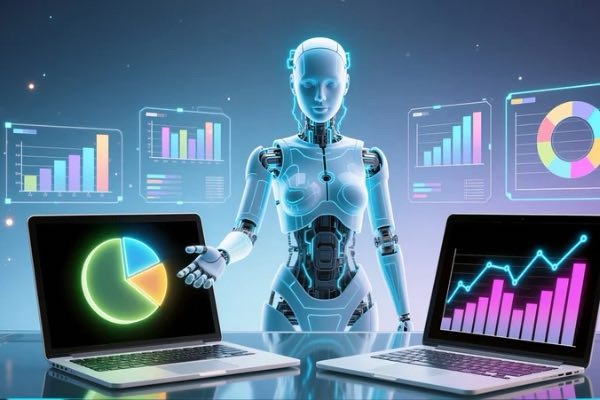
AI no longer replaces creativity; it amplifies it.
In 2026, small businesses can produce high-quality content at a pace that was unimaginable five years ago.
Use AI to:
Generate ideas for blogs, videos, and social content
Rewrite or repurpose existing material
Analyze market trends
Personalize customer messages at scale
Tools to watch:
GPT-based content generators
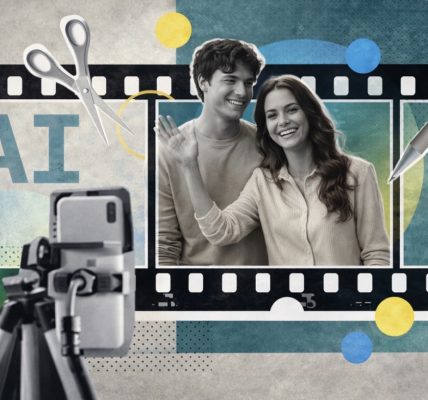
Synthesia-style video creation
Canva’s AI design suite
Jasper for long-form copy
AI is not the strategy — but it is the engine.
Your story is the strategy.
2. Short-Form Video Will Lead Every Platform
Attention spans are short; impact must be quick and memorable.
Platforms like Instagram Reels, YouTube Shorts, TikTok-style formats (wherever available), and even LinkedIn micro-videos will dominate.
Winning approaches:
15–45 second explainers
Founder-on-camera storytelling
Before–after transformations
Customer testimonial clips
Quick educational bites
You don’t need a studio.
You just need honesty, clarity, and consistency.
3. Hyper-Personalized Email Marketing
Email remains the highest-ROI channel for small businesses — but generic newsletters no longer work in 2026.
Personalization is everything.
With AI and segmentation tools, you can:
Send different emails based on user behaviour
Automate follow-ups and nurture sequences
Personalize product recommendations
Create multi-step journeys for onboarding, retention, and reactivation
Tools to consider:
Mailchimp (paid)
Sender or MailerLite (free/affordable)
Klaviyo for ecommerce brands
Email is where loyal customers are created — quietly, consistently, predictably.
4. Social Trust > Social Media
In 2026, people don’t just buy products — they buy proof.
Your customers trust:
Real testimonials
Screenshots
Reviews
Unedited experience videos
User-generated content (UGC)
Encourage customers to share their own photos and videos. Reward them. Feature them. Celebrate them.
People believe people more than they believe ads.

5. Community Is the New Currency
2026 belongs to businesses that build communities, not just customer lists.
Create:
WhatsApp groups
Telegram communities
Membership circles
Private forums
Loyalty clubs
The goal is to move your customers from followers to family.
Once they feel connected, you won’t have to sell to them — they will buy naturally.
6. Local SEO Is Non-Negotiable
If your business is location-based, digital visibility starts with your Google Business Profile.
In 2026, this is your online storefront.
Optimize by:
Adding weekly updates
Posting customer photos
Collecting reviews
Responding to every review
Adding local keywords
Frequently updating services/products
Ranking in the top three local search results can transform daily footfall — no ads needed.
7. Paid Ads: Smarter, Not Bigger
Small businesses don’t need huge budgets.
They need precision.
In 2026, smart paid advertising means:
Start small
Test different creatives
Target micro-audiences
Use retargeting to warm up leads
Track conversions, not vanity metrics
The best-performing channels for small businesses:
Meta Ads (Facebook/Instagram)
Google Search Ads
YouTube Ads (remarketing)
Pinterest Ads for lifestyle brands
Spend where intent is high — not where noise is loud.
8. Partner With Micro-Influencers
Influencers with 1,000–20,000 followers outperform celebrities for small businesses.
Why?
Because they are trusted, relatable, and cost-effective.
Collaborate on:
Product demos
Testimonials
Giveaways
Content co-creation
Affiliate partnerships
A collection of small influencers often brings more results than a single big influencer.
9. Conversational Commerce Will Explode
People increasingly buy through conversations, not checkouts.
WhatsApp, DM, Messenger, and website chatbots are now conversion engines.
Use automated chat flows to:
Answer FAQs
Share catalogs
Confirm orders
Offer instant discounts
Recover abandoned carts
The future of marketing is talking, not only posting.
10. The Founder’s Voice Is the Brand
More than ever, customers want to know:
Who is behind the business? What do they believe in? Why do they do this?

When the founder’s voice becomes visible, the business becomes human.
You can express this through:
Personal videos
Weekly reflections
Behind-the-scenes stories
Lessons from your journey
Customer appreciation posts
People don’t just buy what you sell.
They buy who you are.
A Closing Reflection
2026 is not the year of more tools — it is the year of more authenticity.
It is not the year of louder marketing — it is the year of clearer communication.
It is not the era of competition — it is the era of connection.
Small businesses that win in 2026 will not be the ones with the biggest budgets, but the ones with:
a consistent story
a clear message
a human face
a community that believes in them
and the humility to learn and evolve
Marketing in 2026 is not about dominating minds it is about touching hearts.
And every small business has the power to do that.