From 90 Kilos to the Fight Ring: The Unscripted Journey of Fenny – MMA Fighter and Owner of Ronnie’s Little Kitchen

From a 90-kilo transformation and a chance encounter with an MMA club to medals, injuries, the loss of his father, financial uncertainty and a café built from scratch—Sunil Raj, better known as Fenny, has lived several lives. Today, he trains fighters in the morning and runs Ronnie’s Little Kitchen with his wife Sahitya in the evening. His story is not simply about fighting. It is about starting over, again and again.
There is a particular kind of silence that exists before a fight.
The crowd may be waiting. The opponent may be standing across the cage. The body may be bruised, the mind may be racing, and every instinct may be telling you to prepare for what is coming.
But the real fight often begins much earlier.
For Sunil Raj, better known as Fenny, the fight has never been confined to a cage.
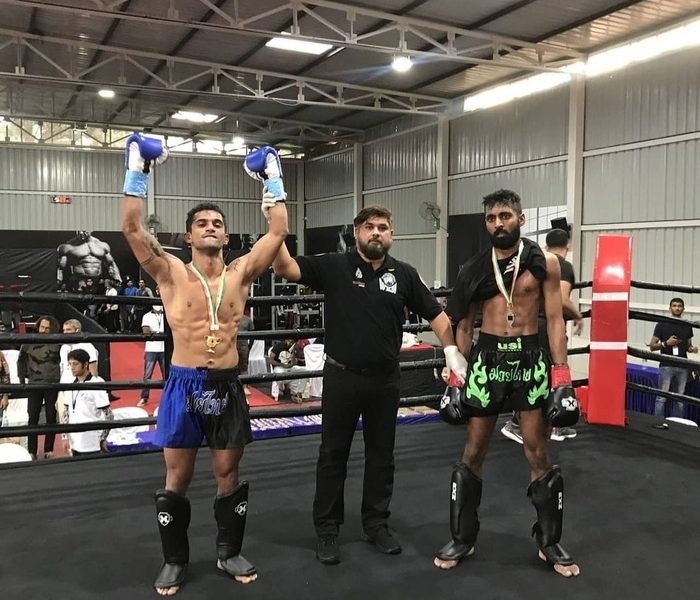
It began when he decided to transform himself from a man weighing more than 90 kilos into someone weighing 65. It continued when he walked into an MMA club in 2018 without even knowing what MMA was—and quit within ten days. It returned when he went back, eventually stepping into competitions he initially had no desire to enter.
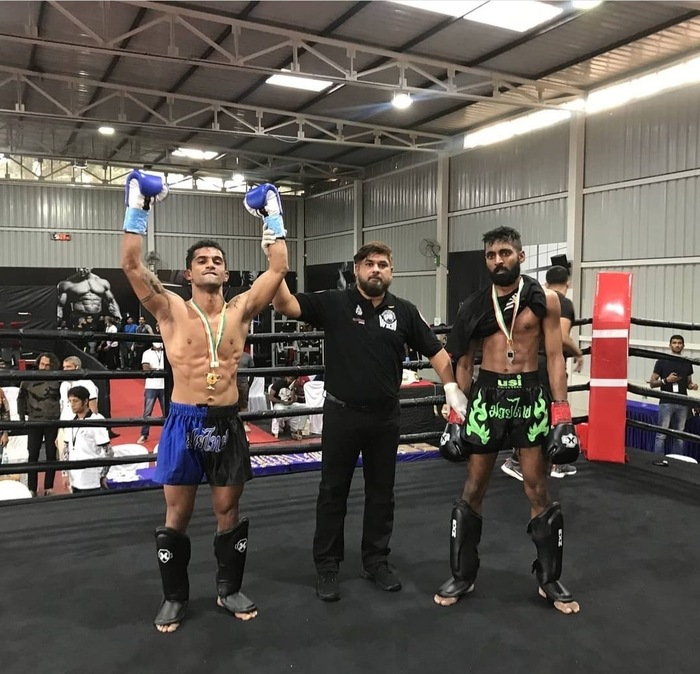
It took him through gold medals, a silver medal, injuries and even a period when he could not see for nearly two weeks after a fight.
Then, in 2020, life presented him with an opponent he could not simply punch his way through. His father passed away during COVID. Within two months, a family tuffle also meant that Fenny had to leave the travel agency where he had worked for nearly 17 years.
Suddenly, he had lost his father and his livelihood almost at the same time.
The financial uncertainty that followed made an already difficult period even harder. Fenny had to put aside the life he had known and figure out how to start again.
He would eventually stop chasing what was lost and start building something new.
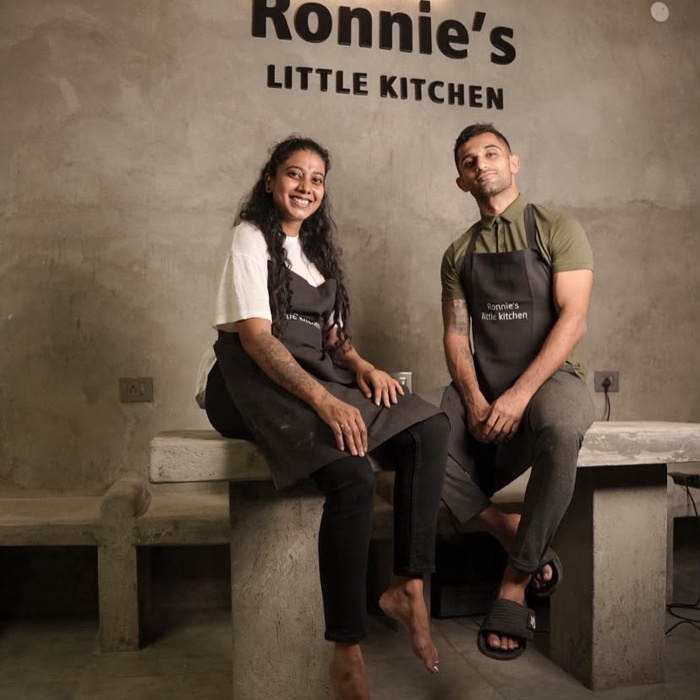
That new chapter would become Ronnie’s Kitchen, a café named after his beloved Saint Bernard, Ronnie.
And standing beside him through almost every difficult turn was his wife, Sahitya.
Today, Fenny’s mornings begin with training clients and himself. His afternoons are spent preparing and running the café. On alternate days, he leaves to train a student in Basavanagudi, while Sahitya takes care of the café. At home, they balance work, family, children and responsibilities.
There are no easy days.
But Fenny has become very good at beginning again.
Here is the story of the fighter, trainer and café owner behind the name
Q. Fenny, your story has so many different chapters—gaming, travel, fitness, fighting, training and now hospitality. If we went back to the beginning, who was Sunil Raj before Fenny came along?
Fenny: I was very different.
I started out as a gamer. I used to play CS and participated in tournaments, including ESL events. At that time, gaming wasn’t as big as it is today, but I managed to win tournaments and make a name for myself.
I was also drinking and smoking back then.
Eventually, I realised I wanted something different. Gaming was a team game. When things went wrong, you could blame the other player or the team.
I wanted something where I could put in 100% and own the result myself.
That eventually led me towards fighting.
Q. But fighting wasn’t your profession when you discovered it. You were working in the travel business, right?
Fenny: Yes. I was working in a travel agency for almost 17 years.
Then COVID came, and everything changed. My father passed away in 2020. Within two months, a family tuffle meant that I had to leave the travel agency. Until then, I had spent nearly 17 years there.
Suddenly, I had lost my father and my livelihood almost at the same time. I had to start from scratch.
Q. Was that the moment when fighting became more than just an interest?
Fenny: In a way, yes.
Before that, I had already transformed myself physically. Between 2017 and 2018, I went from more than 90 kilos to around 65 kilos. That took me about a year. But I didn’t know anything about MMA at that point.
Then, in 2018, I went to deliver a ticket to a friend who owned a poker club and an MMA club. That was the first time I saw an MMA club.
I didn’t even know what MMA meant. I saw the cage and immediately thought of WWE!
The manager explained MMA to me and told me about boxing and fighters like Conor McGregor. My friend offered me an annual package and told me to give it a try.
So I signed up.
Q. And your first experience was not exactly love at first sight.
Fenny: Not at all.
I quit within ten days! They told me to do rolling, people were jumping on me, and I thought, I don’t belong here.
I had paid for the whole year, so I asked for a refund. The manager told me, basically, If you want to train, train. Otherwise leave. But I’m not giving you a refund.
So I didn’t go back for about 15 days. Then I thought, Okay, maybe I’ll take it slowly. And I went back. That decision changed my life.
Q. Was there a person who became central to that transformation?
Fenny: My coach, Roop Jyoti Choudhary. The first day I saw him kicking the bag, I thought, I want to do that.
I didn’t understand that even kicking a bag properly takes months of training. But slowly, he started teaching me.
Even today, I’m training under him. He’s not just my coach. He’s almost like a father to me. If something is wrong in my life, I can talk to him. He gives me guidance not only on the mats, but outside them as well.
Q. You went into the MMA club wanting to kick a bag. How quickly did that turn into actually fighting?
Fenny: Very quickly!
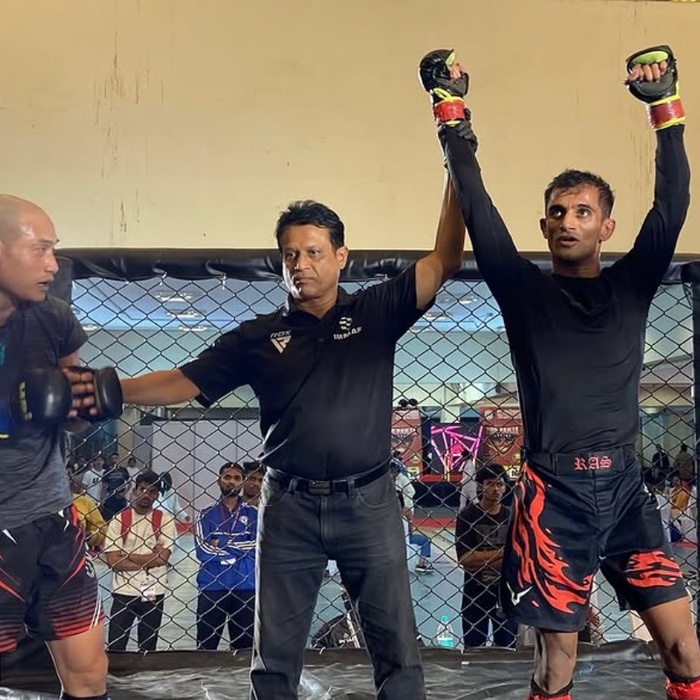
I went there to kick a bag and eventually ended up kicking people. I fought my first MMA fight in 2018 and won. Then came more competitions.
In 2019, I won at the X1 International MMA event. I also went on to win gold medals in the World Kickboxing Network in 2020 and 2021.
For about a year, I kept winning tournaments. The funny part is that I didn’t really want to fight in the beginning. They kept signing me up and pushing me into competitions.
Eventually, I realised that I could actually win.
Q. Was there a particular fight that changed the way you looked at the sport?
Fenny: Yes. Definitely.
In 2021, I fought someone who was much more experienced than me. He had a 24-0 record, while I was only 3-0. There was also a big age difference.
My strategy was very simple: You can hit me as much as you want. I’ll keep moving forward.
I took a huge beating.
After the fight, I couldn’t see for around 12 to 15 days.
Q. You actually lost your vision after the fight?
Fenny: Yes.
I recovered without going to the hospital, but it changed my approach to fighting. Until then, I was thinking about going forward and taking whatever came at me.
After that fight, I started working much more on defence.
I realised that being tough isn’t enough.
You have to be smart.
Q. And despite that beating, you still walked away with a silver medal.
Fenny: Yes.
It was a knockout tournament. I had already won my earlier fight, and the other fighter had also qualified. We met in the final.
I took a huge beating, but I kept going. I won the silver medal. That experience taught me that fighting isn’t only about how much punishment you can take.
Q. You have also fought across different disciplines—kickboxing, Jujutsu and MMA. Why did MMA eventually become your focus?
Fenny: I was an all-rounder.
If there was a kickboxing tournament, I’d sign up. If there was Jujutsu, I’d sign up.
But as I got older, things changed.
I was around 35, and I realised I couldn’t keep standing and fighting younger opponents forever. I had to use my IQ. MMA suited that.
There isn’t much room for politics or points. You go inside the cage and you know how you won and how you lost.
It’s do or die.
Q. You have also pushed your body through some extreme weight cuts. What was the toughest one?
Fenny: My normal walking weight is around 65 kilos, and I generally fight below 60. But my coach wanted me to experience what other fighters go through when they cut weight.
In about 54 hours, I lost 5.6 kilos, including water weight.
I wasn’t extremely tired, but my muscles weren’t supporting me properly.
I was approved for the flyweight division at 56 kilos.
I won my first fight against a fighter from Taiwan.
But during the next fight, I tore a major portion of my muscle. The fight had to be declared a no contest.
After that, I decided there would be no more 56-kilo fights for me.
From the Cage to the Café
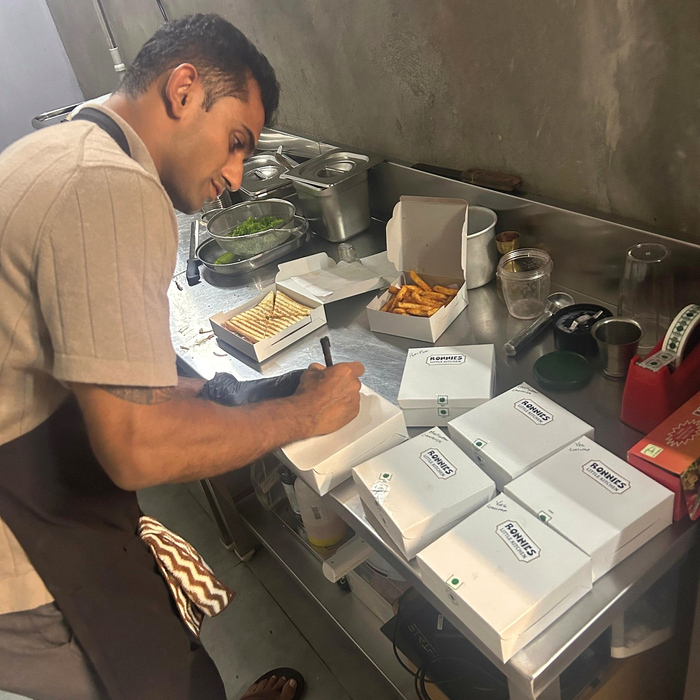
Q. Let’s talk about the other major chapter of your life. Where did the dream of opening a café come from?
Fenny: I’d had the idea of opening a café for a long time. Even my father knew about it. I’d tell him, I want to open a café. He’d say, Yes, go ahead.
But we never actually did it. After my father passed away, everything changed. I had lost the travel agency job, I had financial problems and I was trying to recover money that had been lost after his death.
At one point, we were dealing with around ₹2.72 crore that had been lost through the financial and legal complications that followed. I spent almost two years trying to recover that money through legal cases.
Eventually, I had to stop. I realised I couldn’t keep living in the past.
Q. How did you go from knowing nothing about the café business to actually opening one?
Fenny: I went to a café in Malleshwaram to learn.
I didn’t go there as someone who wanted to become an owner.
I went as a worker.
I washed plates.
I worked under the chef.
I learned how to cut vegetables and prepare different dishes.
The owner deliberately didn’t tell the staff that I was there to learn because he wanted me to experience the work like any other employee.
That was important.
Today, I can do everything in my own café because I started by doing everything myself.
Q. And eventually you found a way to build the café without taking on the burden of rent.
Fenny: Yes.
Someone told me, Why are you looking for a shop elsewhere? Why don’t you do it below your own house? That made sense.
I own the building, so there was no rent issue. We found the space and slowly started building it. It took almost two years because I kept thinking about how I wanted it to look. I was Googling things, looking at Pinterest and changing things.
My wife, Sahitya, finally told me, The more we delay, the more difficult it will become. Let’s just start.
She was right.
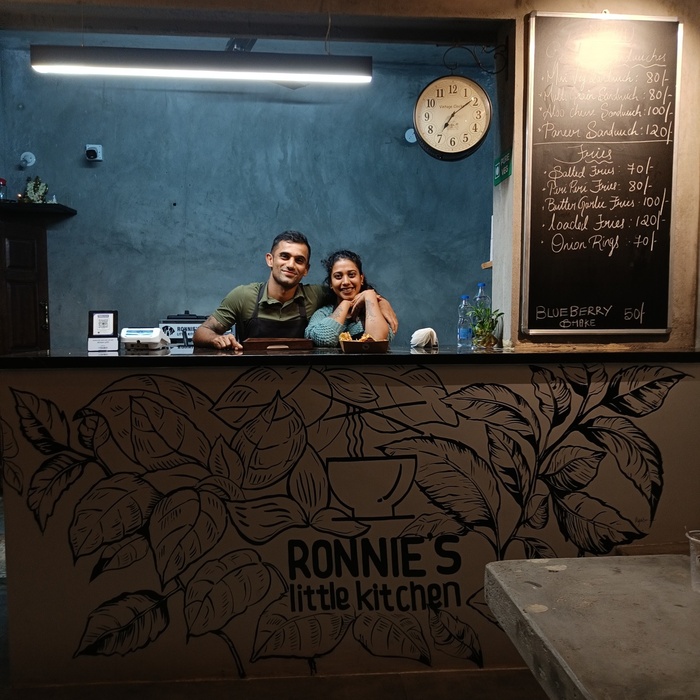
Q. Sahitya seems to have been much more than a supportive spouse in this journey. How important has she been?
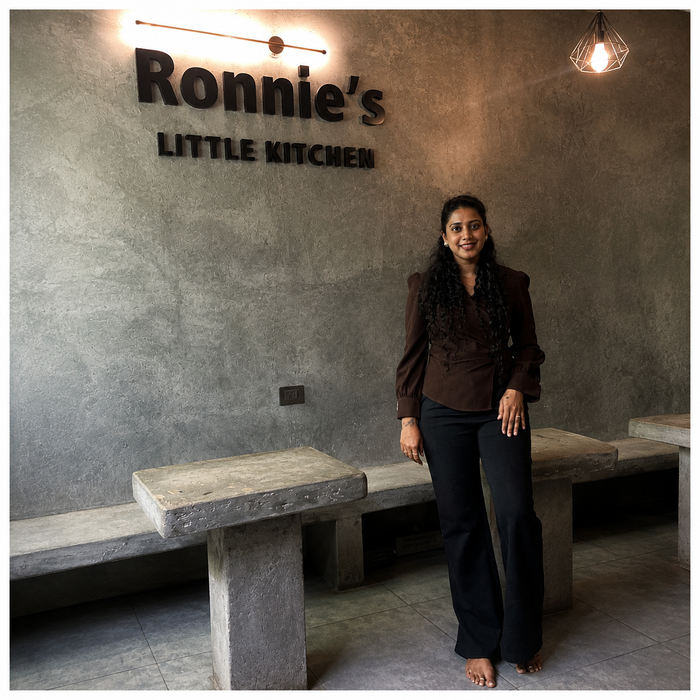
Fenny: She’s the biggest reason I’m able to do all this. Sahitya works, looks after the family, helps with my mother and our children, supports me financially and still finds time to help with the café.
She has supported my MMA from day one too. Whenever I’ve thought about quitting, she’s told me not to. She tells me to continue doing what I love because MMA keeps us disciplined.
If she wasn’t supporting me, I don’t know where I would be today. I might still be chasing the money I lost after my father’s death instead of building something new.
Q. You even named the café after someone very special. Tell us about Ronnie.
Fenny: Ronnie was my Saint Bernard. He was with us for 11 years. When I got him, he was only about two months old and weighed around 5.5 kilos. Eventually, he became more than 90 kilos. But he behaved like a street dog. He would run around everywhere.
My father used to take him for a one-hour walk at 5 in the morning. After my father passed away, I continued doing that. Ronnie changed my life. Because of him, I stopped going out at night as much. I had to take him for walks. I became more disciplined.
He became part of our family. He passed away in 2021. So when I opened the café, I wanted his name to live on.
That’s how Ronnie’s Kitchen came about.

Life Behind the Counter
Q. Today, what does a normal day look like for Fenny?
Fenny: There is no normal day! I leave home around 5:30 in the morning. By 6, I start training my clients. After that, I train myself for about 90 minutes. Then I come home, rest for a little while and start working on the café.
We prepare everything—vegetables, ingredients, orders, everything. I handle the café, the cleaning, the cooking, the cashier work and the online platforms. There are no helpers.
Q. And every alternate day, you still leave the café to train a student in Basavanagudi. How do you manage that?
Fenny: I have a student who trains in Basavanagudi. It’s about a kilometre from the café. Every alternate day, I leave around 6 or 7 to train the student. That’s when Sahitya takes care of the café.
When I come back, we continue together. That’s how we manage it.
Q. Your café is still relatively young, but you’ve already had days when the crowds became difficult to handle.
Fenny: Yes.
We haven’t really done any marketing. The café is around half a kilometre from Lalbagh, so we get some tourists and foreign customers who find us through Google. We also get orders through Swiggy, Zomato and other online platforms.
The evening crowd, especially between 6 and 8, can get very busy. There have been times when I’ve actually had to close the shutter because I couldn’t handle any more orders. People were already inside, and I had to tell them I’d finish their orders, but I couldn’t take more customers.
I’ve also had to temporarily turn off the online platforms when the orders became too much.
Q. For someone who is simultaneously training as a fighter and running a café, that’s quite a workload. What keeps you going?
Fenny: Discipline.
MMA has helped me with that.
We don’t smoke. We don’t drink. We don’t go down those routes.
We might eat junk food on the weekend—that’s probably our only bad habit!
But the discipline from fighting carries into everything else.
Q. Do you still consider yourself a fighter first?
Fenny: Yes. I still want to fight. I’m recovering right now, and I had thought I might fight again soon.
But now I have the café and the family responsibilities too.
So I have to balance everything.
More Than a Fight Name
Q. Why should people know you as Fenny rather than Sunil Raj?
Fenny: Fenny is my fight name. When someone calls me Fenny, I know they already know me. Sunil is my official name, but Fenny is the name people associate with me in fighting.
My fight records and event announcements have Sunil Raj, aka Fenny. So Fenny became part of who I am.
Q. Looking back, you’ve gone from gaming to fighting and now to entrepreneurship. Do you see a common thread connecting all these chapters?
Fenny: Whenever I choose something, I want to give it 100%.
With gaming, I wanted to win tournaments.
With fighting, I wanted to win medals.
Now with the café, I want to build a name.
The difference is that today I understand that building something takes time. With the café, we’ve decided to give ourselves around two years to build the name. The money has to come eventually, but first we have to build something people recognise.
Q. What has fighting taught you that you now apply to business?
Fenny: You can’t keep going forward blindly. Earlier, I thought the answer was to keep charging. Then I took a huge beating and couldn’t see for 15 days. That taught me defence.
Business is similar.
You have to know when to push and when to step back.
You have to take your losses, learn from them and continue.
Q. You’ve had to start over several times. What has been the hardest restart?
Fenny: After my father’s death. Before that, I could always go to my father. Then suddenly he wasn’t there.
The travel agency job was gone. The money situation was bad. I had legal cases going on. I was jobless. I had to accept that the life I had before wasn’t coming back. That was probably the hardest part.
Q. And what did you do when you realised that?
Fenny: I started again.
That’s it.
I didn’t know how to run a café, so I went and worked in one.
I didn’t know how to fight, so I trained.
I didn’t know how to lose weight, so I started.
You don’t need to know everything before you begin.
You learn along the way.
Q. If you could give one piece of advice to someone who feels like they have lost everything, what would it be?
Fenny: Stop looking backwards. If something is gone, you can’t change it. You have to decide what you’re going to do next.
I spent a long time trying to recover what was lost. Eventually, I realised I needed to build something new. That’s what I’m doing now.
Q. And what does success mean to you today?
Fenny: Earlier, success was about winning tournaments and getting medals.
Now it’s different.
I want the café to grow.
I want people to know the name.
I want to eventually have employees so that the business can run without me doing everything.
And I still want to fight.
But now, I also have responsibilities.
So success is not just about winning anymore.
It’s about building something and being able to take care of the people around me.
Q. Finally, if you had to describe your journey in one sentence, what would it be?
Fenny: Whenever I choose something, I give it 100% and keep moving forward.
The Fight Continues
There is an irony in Fenny’s story.
He entered the world of combat because he wanted to prove something—to himself and perhaps to the people around him. He wanted to transform his body, win tournaments and make a name for himself.
He did.
But the medals are no longer the only measure of his victories.
Today, the victories are quieter.
They are in a café below his home that he built with his wife.
They are in the customers who discover Ronnie’s Kitchen without a single rupee spent on marketing.
They are in the mornings when he gets up at 5:30 to train.
They are in the evenings when he and Sahitya juggle the café and family responsibilities.
They are in the fact that after losing his father, his livelihood and a significant amount of money, he did not allow the losses to become the final chapter.
And perhaps most importantly, they are in the lessons he has carried from the cage into everyday life.
Fenny has learned that resilience isn’t about never getting knocked down. It is about learning how to stand up differently each time.
He has already done it once—from 90 kilos to 65. He did it again after losing his vision.
Again after injuries.
Again after losing his livelihood.
Again after financial uncertainty.
And now, he is doing it once more—this time building a café, training fighters and creating a life with Sahitya that belongs entirely to them.
The fighter is still there.
The cage is still calling.
But for now, there is another fight to win.
The fight to build something that lasts.