Days with many activities often include full schedules and quick meals, which can make a clean kitchen difficult to maintain. Messes are common when people prepare food, assist children and manage other tasks at the same time. Establishing simple habits is a way for families to keep the kitchen organized without increasing their stress.
Improving Meal Preparation
Effective meal preparation is a primary way to lower mess – Families who plan meals are able to organize ingredients and prepare portions with less clutter. The kitchen is easier to manage when people have a clear plan for what they are cooking. Preparing ingredients before cooking is another way to lower the time spent cleaning later. Washing produce and gathering tools in advance reduces movement and helps the process stay smooth – these steps are helpful for maintaining order in the room.
Keeping Surfaces Organized
Kitchen counters are often full because individuals use them for many different tasks. The workspace is more efficient for cooking when people return items to their correct places immediately. Removing items that are not in use prevents the area from becoming crowded. Families are able to keep the kitchen organized when they use specific areas for common items. Storing tools and food in the same locations helps every person know where items belong – this structure makes it easier for family members to help maintain the space.
Establishing Cleanup Routines
Small habits throughout the day are useful for preventing large messes. Maintenance is easier when people wipe counters and clean spills as soon as they happen – these actions are quick but they have a clear effect on the organization of the room. Encouraging family members to clean while they work is also helpful. Small efforts from everyone keep the kitchen under control so that tasks do not accumulate until the end of the day. Work is less difficult when the responsibility is shared.
Managing Dishes
Dishes are a frequent cause of clutter in busy homes – A consistent routine is a way to prevent sinks from becoming full of items. Families are able to set specific times to wash dishes or load machines to keep the area clear. Using helpful products is a way to support these routines – As an example, dishwasher tablets are simple to use and help the cleaning process stay consistent. An organized approach to dishes allows individuals to focus on other tasks.
Involving the Family
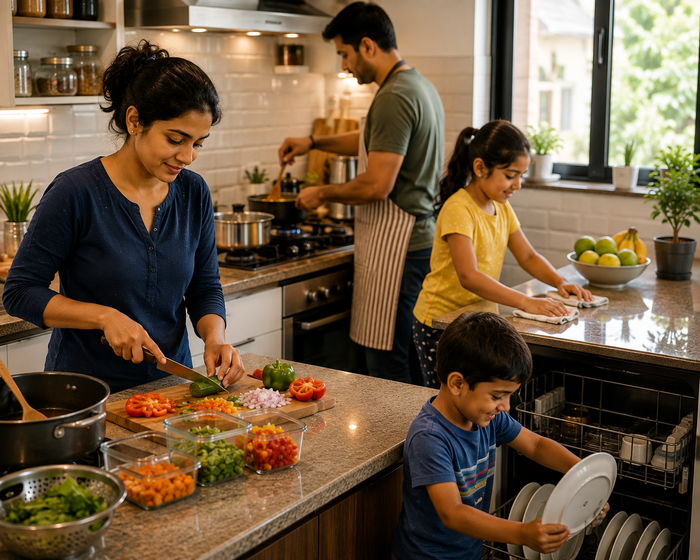
Managing a kitchen is easier when every person in the home participates. Children are able to do tasks that match their age, like clearing their own plates or putting items away – these tasks help children learn habits and lower the workload for parents. Parents are able to make cleaning a normal part of the day – setting clear expectations. The kitchen is more organized when every person understands their role. Working together is a way for children to learn how to care for their home.
Organizing Storage
A storage system that is well organized prevents clutter from building up. Family members can find what they need quickly when food and tools have specific places – this organization allows daily activities to proceed without interruption. Storage solutions are most effective when they meet the specific needs of the family. Items that people use often should be in places that are easy to reach. A logical layout makes daily tasks simpler and prevents unnecessary messes.
Maintaining Habits
Long-term organization is the result of daily habits rather than occasional deep cleaning. Simple routines are a way to make kitchen maintenance feel manageable every day. Families who follow these patterns are less likely to have kitchens that feel overwhelming. It is important to change routines as the needs of the family evolve. Different schedules or meal patterns may require new ways to stay organized. A flexible system is a way to keep the kitchen functional as the family grows.
Conclusion
Reducing kitchen mess requires practical routines and shared effort. Households are able to create a functional space – improving preparation, managing dishes and involving every family member. Small changes to daily habits are a way to make the home environment more organized.