The years between two and six do not look serious.
There are no report cards that matter.
No competitive exams.
No visible pressure.
And yet, these are the years that quietly shape everything.
How a child learns.
How a child thinks.
How a child feels about learning itself.
Early childhood is not about “starting education early.”
It is about starting it right.
Learning at This Age Is Not Academic — It Is Foundational
Between ages 2 and 6, a child’s brain develops at an extraordinary pace. Studies suggest that nearly 85–90% of brain development happens before the age of six.
But this development is not driven by textbooks.
It is driven by:
- Play
- Interaction
- Exploration
- Observation
Children at this stage are not meant to memorize.
They are meant to experience.
The focus should not be on “how much they know,” but on how they learn.
Language Exposure Is One of the Greatest Advantages
Children in India grow up in a uniquely rich linguistic environment.
Multiple languages at home.
Regional languages outside.
English in educational settings.
This is not confusion.
It is an advantage.
Early exposure to language builds cognitive flexibility, improves communication, and enhances memory. Conversations, storytelling, songs, and everyday interactions contribute far more than structured vocabulary drills.
The more a child hears, speaks, and expresses — the stronger their foundation becomes.
Play Is Not a Break From Learning — It Is Learning
One of the biggest misconceptions is treating play as separate from education.
In reality, play is the most powerful learning tool at this age.
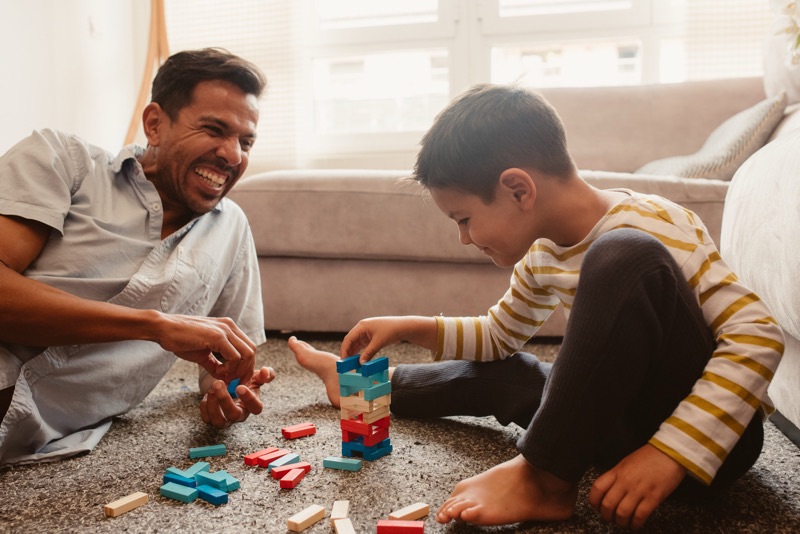
Building blocks teach problem-solving.
Pretend play builds imagination.
Group play develops social skills.
Outdoor play strengthens physical coordination.
A child running, exploring, and interacting is not “wasting time.”
They are developing multiple skills simultaneously.
Structured learning too early can limit curiosity.
Unstructured play expands it.
Emotional Security Comes Before Intellectual Growth
A child learns best when they feel safe.
Not just physically, but emotionally.
Encouragement, patience, and a positive environment build confidence. Constant correction, comparison, or pressure can create hesitation and fear.
At this age, education is not just about learning letters and numbers.
It is about developing:
- Confidence to try
- Comfort in expressing
- Freedom to make mistakes
Children who feel secure learn faster — and better.
Schools Should Be Chosen for Environment, Not Just Reputation
In India, early schooling decisions are often influenced by brand names and academic expectations.
But between ages 2 and 6, what matters most is not the school’s reputation.
It is the environment.
Look for:
- Teacher-child interaction quality
- Safe and engaging spaces
- Balance between play and structured learning
- Emotional warmth and patience
A child does not remember a school for its syllabus.
They remember how it made them feel.
Routine Builds Stability Without Restricting Curiosity
Children thrive in predictable environments.
Regular meal times, sleep routines, and learning patterns create a sense of stability. This helps children feel secure and improves their ability to engage.
But routine should not become rigidity.
Flexibility is equally important. Children should have space to explore, ask questions, and follow their curiosity.
The balance between structure and freedom defines effective early education.
Screen Time Needs Thoughtful Limitation
Digital exposure is becoming unavoidable.
But unmanaged screen time can affect attention span, sleep quality, and social interaction.
At this stage, real-world experiences are irreplaceable.
Touching objects.
Playing outdoors.
Interacting with people.
If screens are used, they should be:
- Limited in duration
- Age-appropriate
- Supervised
Technology should support development — not replace it.
Focus on Skills, Not Just Knowledge
Instead of asking what a child knows, it is more important to observe what a child can do.
Can they communicate clearly?
Can they interact with others?
Can they solve simple problems?
Can they express emotions?
These are life skills.
And they matter far more than early academic achievements.
Knowledge can be built later.
Skills shape how that knowledge is used.
Avoid Comparison — Every Child Has a Different Pace
One of the most common pressures in Indian parenting is comparison.
“Other children can already read.”
“Someone else is ahead in writing.”
But early childhood development is not linear.
Each child grows at their own pace.
Pushing too early can create resistance toward learning itself.
Supporting naturally creates interest.
And interest leads to long-term growth.
Parents Are the First Educators
No school can replace the influence of parents.
Children learn more from what they observe than what they are taught.
Simple actions matter:
Reading at home
Conversations during meals
Encouraging questions
Listening patiently
Education does not begin at school.
It begins at home.
The Indian Context: Opportunity and Responsibility
India today offers access to diverse educational resources.
Preschools, activity-based learning centers, early education programs — the options are growing.
But with more options comes more responsibility.
Choosing wisely becomes essential.
Because early choices influence long-term attitudes toward learning.
A Final Thought
Between the ages of two and six, children are not preparing for exams.
They are preparing for life.
They are building curiosity, confidence, communication, and character — often without anyone noticing.
These years do not need acceleration.
They need attention.
Because when the foundation is strong, everything that follows becomes easier.
And when learning begins with joy, it rarely feels like a burden later.
That is the real goal of early education.