There was a time in India when sports largely belonged to two groups.
Professional athletes.
And children.
For everyone in between — working professionals, college students, parents, entrepreneurs, retirees — sports slowly faded into memory as responsibilities grew. Playgrounds disappeared from routines, fitness became secondary, and social life moved increasingly indoors and online.
But over the last decade, something remarkable has happened.
India has quietly begun playing again.
Not necessarily in stadiums.
Not always competitively.
But consistently, socially, and collectively.
Across cities, apartment communities, turf grounds, badminton courts, cycling groups, marathons, and sports apps, a new culture has emerged — the culture of community sports.
And platforms like Playo became symbolic of this transformation.
The India That Once Played Less
For years, one of India’s biggest lifestyle challenges was inactivity.
Urbanization increased. Desk jobs expanded. Screen time grew rapidly. Physical movement reduced significantly, especially among adults.
Sports gradually became viewed as luxury activities rather than lifestyle essentials.
Finding players was difficult.
Booking courts was inconvenient.
Communities lacked organized participation systems.
Even people who wanted to play often stopped because coordination itself became exhausting.
The desire existed.
The ecosystem did not.
The Shift Begins Around the Mid-2010s
Around 2014–2016, India began witnessing a subtle but important cultural shift.
Several trends converged:
- Rising health awareness
- Growth of fitness culture
- Expansion of urban sports infrastructure
- Smartphone penetration
- Digital payments and app ecosystems
- Growing middle-class spending on experiences
At the same time, younger professionals started prioritizing lifestyle balance differently. Fitness was no longer limited to gyms. People began searching for enjoyable ways to stay active.
Sports naturally re-entered the conversation.
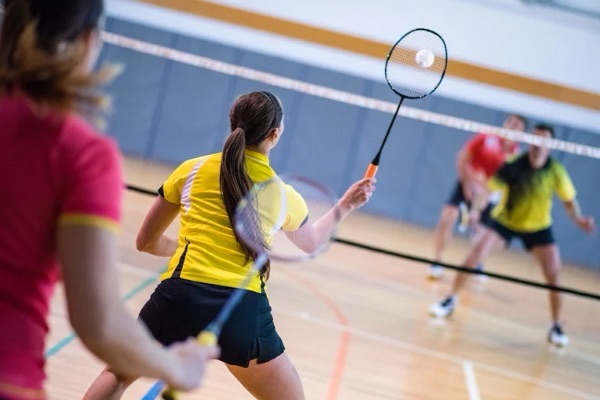
Badminton courts started filling up after office hours. Weekend football groups expanded. Amateur cricket leagues multiplied. Cycling clubs, running communities, and recreational sports groups grew across major cities.
What changed was not just participation.
It was accessibility.
How Platforms Like Playo Changed the Game
One of the biggest barriers to recreational sports had always been coordination.
Who will play?
Where do we book?
How do we find nearby players?
This is where platforms like Playo transformed the ecosystem.
Apps began solving friction points that previously discouraged participation:
- Court discovery
- Booking systems
- Player matching
- Community formation
- Event organization
Suddenly, someone could finish work at 7 PM and still find a badminton game nearby through a few taps on a smartphone.
That simplicity changed behavior.
Sports became easier to access than ever before.
The Explosion of Badminton and Turf Culture
Few sports benefited from this shift as dramatically as badminton.
Affordable indoor courts, quick game formats, and lower team-size requirements made badminton one of India’s fastest-growing urban recreational sports.
Similarly, football turf culture exploded across cities.
Artificial turfs emerged in:
- Bengaluru
- Mumbai
- Hyderabad
- Chennai
- Delhi NCR
- Pune
Weekend sports transformed into social rituals for working professionals.
For many urban Indians, sports stopped being “exercise.”
They became community experiences.
The Business of Community Sports
What once looked informal gradually became a major industry.
India’s sports and fitness ecosystem began attracting investment across:
- Sports tech
- Turf infrastructure
- Sportswear
- Coaching academies
- Recreational leagues
- Health-focused communities
The broader Indian sports industry today is valued in billions of dollars, with recreational participation becoming an increasingly important segment.
The rise of community sports also boosted adjacent industries:
- Smart wearables
- Sports nutrition
- Sports physiotherapy
- Local tournaments
- Amateur content creation
Playing sports was no longer niche.
It became lifestyle-driven.
Mental Health and the Social Value of Sports
One of the most important outcomes of this rise has been psychological.
Modern urban life often creates isolation despite digital connectivity.
Community sports quietly solved something deeper:
- Social interaction
- Stress relief
- Belonging
- Routine
- Emotional balance
People who met as strangers on courts became friends. Corporate employees built social circles beyond offices. Families began engaging in physical activity together.
Sports became not just physical wellness.
But social wellness.
Women’s Participation Has Also Expanded
The last decade also saw increased female participation in recreational sports.
Safer sports environments, indoor facilities, women-only communities, and growing fitness awareness encouraged more women to engage consistently in:
- Badminton
- Running
- Yoga communities
- Cycling groups
- Fitness leagues
This shift is important because it reflects broader societal change around lifestyle ownership and wellness.
Technology Turned Participation Into Habit
Apps and digital platforms did more than organize games.
They gamified consistency.
Bookings, activity tracking, player ratings, fitness integration, and social engagement helped create recurring behavior. Once people entered sports communities, participation became easier to sustain.
Technology reduced the activation energy required to stay active.
And that matters enormously in habit formation.
The Pandemic Accelerated Appreciation for Physical Activity
COVID-19 became a turning point.
Lockdowns highlighted how essential movement and community are for mental and physical well-being. After restrictions eased, sports participation surged in many cities.
People were no longer playing only for competition.
They were playing for health, sanity, energy, and human connection.
This emotional shift deepened the importance of community sports.
What the Future Looks Like
India’s community sports ecosystem is still early in its growth story.
The coming decade is likely to witness:
- More hyperlocal sports infrastructure
- AI-powered sports matching and analytics
- Smart indoor sports facilities
- Corporate-backed recreational leagues
- Increased youth and family participation
- Integration of fitness and social networking
Smaller cities are also beginning to adopt this culture more rapidly as digital access expands.
Community sports may eventually become as normalized as going to cafes or cinemas.
A Final Thought
Perhaps the most inspiring part of this movement is not the technology.
It is the return of play itself.
Adults rediscovering sports.
Communities forming through movement.
Fitness becoming joyful again.
India’s rise in community sports over the last decade reflects something larger than recreation.
It reflects a society slowly remembering that movement is not just exercise.
It is connection.
And platforms like Playo did not create that desire.
They simply made it easier for people to find each other… and play again.