A motorcycle crash can leave you with medical bills, lost work, and a wrecked bike. Motorcyclists face a higher risk of death and serious injury than car occupants do. Getting legal help after a motorcycle crash can help you understand what compensation you can claim and protect your rights along the way.
What you can recover from after a crash depends on who caused it, what insurance is in play, how bad your injuries are, and the laws where you live.

Filing an Insurance Claim
The most common way to get paid after a motorcycle accident is through an insurance claim. If another driver caused the crash, you can file a claim against that driver’s liability insurance.
If the facts show the other driver was at fault, such as failing to yield, cutting you off, following too close, or texting while driving, you likely have a valid claim.
Insurance can cover your medical bills, lost income, motorcycle repairs, and other losses tied to the crash. But insurers don’t just hand over money. They investigate the crash, dig through your records, and often try to downplay your injuries to pay less.
Medical Bills and Ongoing Care
Medical costs are often the biggest expense after a crash. You might need emergency care, surgery, a hospital stay, physical therapy, medication, or repeat visits to a doctor.
A claim can cover reasonable medical costs tied to the accident, both what you’ve already paid and what you’re likely to need down the road.
Save everything. Hospital bills, prescription receipts, therapy notes, and test results all help prove how the crash affected your health and your wallet.
Some injuries need care for months or years. Broken bones, spine damage, and brain injuries can change your life long after the crash, and CDC data on motorcycle safety shows how often these crashes lead to serious harm. Your claim should reflect the full cost of your injury, not just the first round of bills.
Lost Income and Reduced Ability to Work
A motorcycle accident can keep you out of work while you heal, or it can leave you unable to return to your old job at all.
You may be able to claim the income you lost while recovering, and in some cases, the money you’ll lose in the future if the injury limits what work you can do. Someone with a serious leg injury, for example, might not be able to go back to a physical job, and that loss can stretch on well past the initial recovery.
Pay stubs, tax records, and a letter from your employer can all help back up a wage loss claim.
Damage to Your Bike and Gear
Bikes take a beating in a crash, and repairs aren’t cheap, especially with frame damage or engine problems.
If someone else caused the crash, you can usually claim the cost to fix or replace your motorcycle. This can extend to other damaged items too, like your helmet, jacket, luggage, or anything else you were carrying.
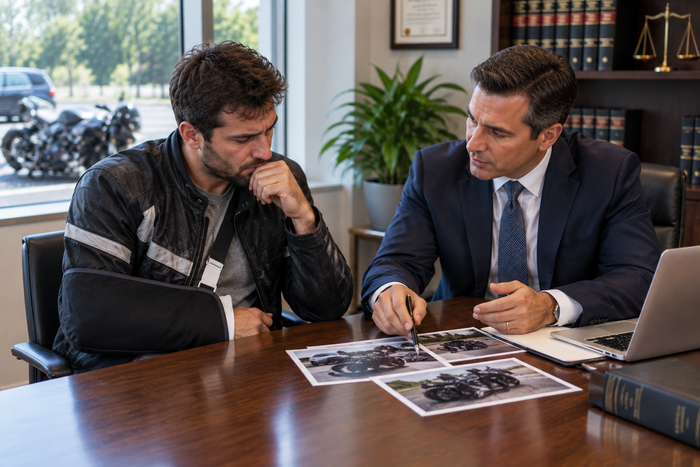
Take photos of the bike right after the crash. Repair quotes, receipts, and proof of the bike’s condition before the accident all support a property damage claim.
Pain and Suffering
Not every loss shows up on a receipt. Physical pain, stress, trouble sleeping, and not being able to do the things you used to do all count too. These are called non-economic damages, or pain and suffering.
How much you can recover here depends on the details of your case. How bad the injury is, how long recovery takes, whether you’re left with lasting limits, and how much your daily life has changed all factor in.
Tell your doctor how the injury has changed your routine, and keep notes on it yourself. This record can help show the real toll the crash has taken.
When the Other Driver Doesn’t Have Enough Insurance
Sometimes the driver who caused the crash doesn’t carry enough insurance, or any at all, to cover your losses. About one in seven drivers on the road today is uninsured, according to the Insurance Information Institute’s data on uninsured motorists.
If your own policy includes uninsured or underinsured motorist coverage, it can step in and help cover what the other driver’s insurance can’t. This matters a lot when your bills are high and the at-fault driver’s policy limit is low.
Motorcycle policies don’t always work like standard car insurance, so check your coverage closely instead of assuming a benefit applies.
When You May Need to File a Lawsuit
Sometimes an insurance claim doesn’t end in a fair payout. If the insurer denies your claim or won’t offer a reasonable amount, filing a personal injury lawsuit is an option.
A lawsuit gives you a formal way to present proof of fault, injuries, and financial loss. It can also uncover information you wouldn’t get through regular insurance talks.
Most cases still settle before trial. Still, building your case as if it’s headed to court helps make sure nothing important gets lost or forgotten.
Evidence That Backs Up Your Claim
Strong evidence can make or break a motorcycle accident claim. Useful proof includes:
- Police reports
- Photos of the scene
- Video footage
- Medical records
- Witness statements
- Repair estimates
- Insurance paperwork
Photos of the crash scene show where the vehicles ended up, road conditions, signs, damage, and visible injuries. Witnesses matter too, especially when drivers tell different versions of what happened.
Medical records tie your injuries directly to the crash. Wearing a DOT-approved helmet also helps cut the risk of a serious head injury if a crash happens.
Don’t delete text messages, photos, or other records related to the accident. They might matter later, even if they don’t seem important now.
Talking to Insurance Adjusters
After a crash, an adjuster may call to ask about what happened, your injuries, and your treatment.
Answer honestly, but don’t guess at things you’re not sure about. Watch your wording too, since anything that sounds like an apology or admission can be used against you later.
A quick settlement offer might look tempting once bills pile up and paychecks stop coming in. But signing that offer usually closes the door on asking for more later. Read the fine print and understand what you’re giving up before you sign anything.
Don’t Miss Your Filing Deadline
Every state sets a deadline for filing a personal injury claim. Miss it, and you may lose your right to recover anything at all.
These deadlines shift depending on the type of claim and who’s involved, so don’t assume you have all the time in the world. Talking to a lawyer early can help you figure out your deadline, your coverage, and where compensation might come from.
The Bottom Line
The cost of a motorcycle accident often goes way beyond that first trip to the hospital. You may be able to recover money for medical care, lost wages, property damage, pain and suffering, and more when someone else caused the crash.
What you’re owed depends on the details of your case. Document everything, follow your treatment plan, hold onto evidence, and understand your coverage before you make any big decisions.
If you’re dealing with a serious injury from a motorcycle crash, understanding your options makes the whole process easier to handle. A close look at the crash, your insurance, your medical records, and your long-term losses can help you get the compensation you’re entitled to under the law.