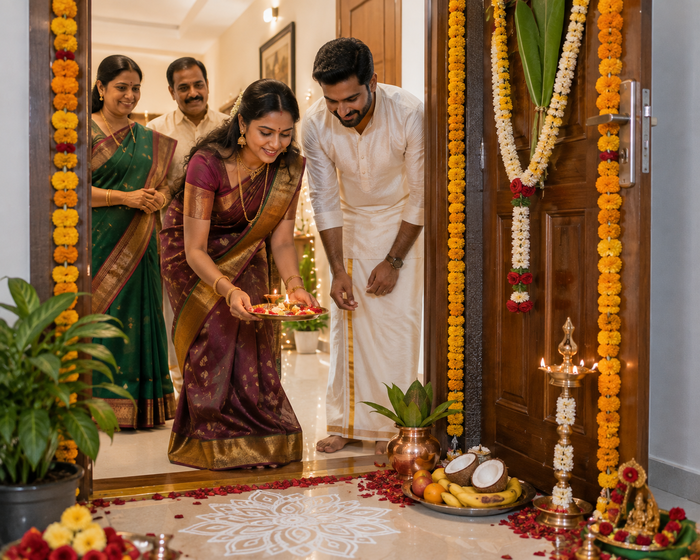
A housewarming is more than a celebration of moving into a new home. For many Indian families, it marks the beginning of a new chapter and brings together relatives, friends and neighbours to share the occasion.
Food naturally becomes an important part of such gatherings. Depending on the family’s traditions, a housewarming may involve a pooja, a traditional meal, snacks for guests, or a larger gathering that continues through lunch or dinner.
For families planning a pure vegetarian housewarming in Bangalore, catering can make it easier to focus on the occasion itself while ensuring that guests are served a well-planned meal.
Start by Understanding the Nature of the Housewarming
Not every housewarming celebration follows the same format.
Some families may have a small pooja followed by lunch for close relatives. Others may invite a larger group of friends, neighbours and extended family. The event could also take place over several hours, with guests arriving at different times.
Understanding the nature of the celebration is therefore the first step in deciding the catering requirements.
Consider:
- Number of guests
- Time of the ceremony
- Whether a meal will be served
- Number of food items required
- Traditional food preferences
- Whether guests will be seated or served buffet-style
- Available space in and around the home
These details can help determine the most suitable catering arrangement.
Caterers in Bangalore: What Should You Look for for a Housewarming?
There are many caterers in Bangalore, but a housewarming has some practical requirements that are worth discussing before making a booking.
Since the event may take place at a residential property rather than a banquet hall, the catering team may need to work with limited kitchen access, parking restrictions, smaller serving areas or specific timings.
Families should therefore look for a caterer who can understand the venue and adapt the service accordingly. Food quality is obviously important, but so are preparation, transportation, setup, serving staff and cleanup.
Choose a Menu That Fits the Occasion
A housewarming menu does not necessarily need to be as elaborate as a wedding menu.
In many cases, a carefully planned traditional meal can be more appropriate than a large buffet with dozens of choices.
Depending on the family’s preferences, the menu could include:
- Traditional South Indian preparations
- Rice-based dishes
- Sambar and rasam
- Vegetable preparations
- Curd-based accompaniments
- Snacks or starters
- Traditional sweets
- Beverages
If the gathering is more contemporary, families may also choose a buffet with a broader selection.
The important thing is to create a menu that feels appropriate to the occasion rather than simply adding more dishes.
Traditional Food Can Add to the Significance
Food often has a strong connection with religious and family traditions. For a housewarming ceremony, certain preparations may have a special significance for the family. Traditional sweets or regional dishes may be expected by older family members, while familiar favourites can make the meal more comfortable for guests of different ages.
A pure vegetarian caterer can help families build a menu around these preferences while maintaining variety.
Swaad Caterers, for example, focuses on pure vegetarian catering and works across different types of celebrations, allowing families to discuss menus around the specific nature of their event.
Consider Whether You Need a Traditional Meal or Buffet
The format of the meal can significantly change the guest experience. A traditional seated meal can work particularly well when the housewarming follows a pooja or other ceremony and the family wants to maintain a traditional atmosphere.
A buffet can be more practical when guests are arriving at different times or when there is limited opportunity to seat everyone together.
If you are considering both options, the choice between banana leaf meals and buffet catering can depend on the guest count, available space, nature of the event and the type of experience you want to create.
The decision does not have to be based on tradition alone. Practical considerations matter too.
Think About the Space Available at Home
A residential property can present different challenges from a banquet hall. The kitchen may not have enough space for extensive food preparation. The dining area may be limited. There may also be restrictions on where buffet counters, serving equipment or temporary setups can be placed.
Before finalising the catering arrangement, walk through the space with the caterer if possible.
Consider:
- Where food will be prepared or brought in
- Where the buffet or serving area will be placed
- Where guests will sit
- How guests will move through the dining area
- Where serving staff will stand
- Where used plates and waste will be collected
- Whether there is sufficient access for food delivery
Planning these details in advance can prevent the catering setup from becoming a disruption during the ceremony.
Don’t Forget About Guest Arrival Times
Unlike a formal wedding reception where everyone may arrive around the same time, housewarming guests can sometimes arrive throughout the day.
Relatives may attend the pooja, while friends or neighbours may come later. If the event has staggered guest arrivals, the catering format needs to accommodate that.
A buffet can offer flexibility in such situations, while a traditional seated meal may work better when everyone is expected to eat together.
Discuss the expected schedule with the caterer so that food preparation and service can be timed appropriately.
Plan the Quantity Based on the Guest List
It can be difficult to estimate food quantities for a housewarming because the guest list may change until close to the event. Try to establish a realistic estimate rather than simply preparing for the maximum possible number.
If the event involves multiple groups of guests arriving at different times, communicate this to the catering team.
The caterer can then consider the expected flow of guests while planning preparation and replenishment.
Keep Children and Older Guests in Mind
A housewarming can bring together several generations of a family. Children may prefer familiar and milder preparations, while older guests may look forward to traditional dishes. A balanced menu can accommodate these differences without becoming excessively large. Including a few familiar dishes alongside the traditional preparations can help make the meal comfortable for a wider range of guests.
For a broader approach to planning a menu that accommodates different generations, thinking about a wedding menu that works for guests of all ages offers useful principles that can also apply to family functions.
Think About Hygiene and Food Handling
When food is being served at a residential gathering, hygiene and food handling should receive the same attention as they would at a large venue. The catering team should have appropriate arrangements for food preparation, transportation, storage and serving.
This becomes particularly important when food is being transported from an outside kitchen or catering facility to the home. Families should discuss these arrangements before the event rather than assuming that the caterer will automatically handle every aspect in the same way.
Consider the Overall Catering Budget
A housewarming does not necessarily require a large catering budget, but costs can increase when additional dishes, starters, desserts or service requirements are added.
Start by identifying the essentials.
Ask yourself:
- How many guests are expected?
- How many meals need to be served?
- Is a full meal necessary?
- Which traditional dishes are important?
- Do you need starters or snacks?
- Is a buffet required?
- How much service staff will be needed?
This allows you to build the catering arrangement around the occasion rather than allowing the menu to determine the budget.
If you are working out the numbers from scratch, understanding how to plan a catering budget for a Bangalore wedding can also help you think through guest count, menu and service costs, even if your housewarming is a smaller event.
Book the Caterer Early Enough
A housewarming may be smaller than a wedding, but that does not mean catering can always be arranged at the last minute. Popular dates, festival periods and weekends can be busy for catering teams.
Booking early also gives you more time to discuss the menu, make changes and coordinate the service with the housewarming ceremony. The exact timeline will depend on the scale of the event, but families can benefit from understanding how early you should book a pure veg caterer in Bangalore before finalising their plans.
Discuss the Details Before Confirming
Once you have shortlisted a caterer, discuss the complete requirement rather than confirming the booking based only on a per-plate price.
Clarify:
- Menu and number of dishes
- Guest count
- Service format
- Timing
- Staff requirements
- Equipment
- Transportation
- Setup and cleanup
- Additional charges
- Changes to the guest count
This gives both the family and the caterer a clearer understanding of what needs to be delivered on the day.
Final Thoughts
A housewarming is a personal celebration, and the catering should feel like a natural part of the occasion.
For some families, that may mean a traditional South Indian meal served after the pooja. For others, a flexible buffet may be more appropriate for friends, neighbours and relatives arriving throughout the day.
The right approach depends on the guest list, menu preferences, available space, budget and the kind of experience the family wants to create.
For families looking for pure vegetarian catering in Bangalore, Swaad Caterers can work with the specific requirements of the occasion, from menu selection and guest count to service format and practical arrangements at the venue.
With thoughtful planning, the meal can become an enjoyable part of the housewarming rather than another detail for the family to worry about on the day.