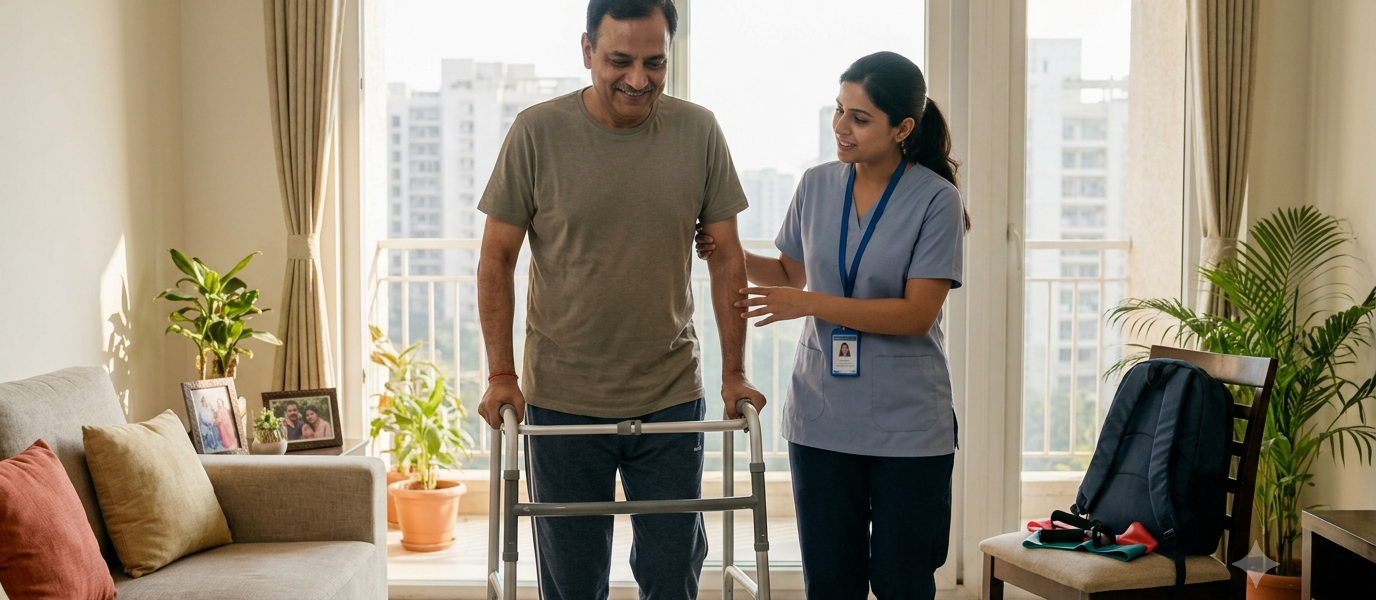

The surgery goes well. You come home. And then at some point in the first week, usually when you’re trying to get to the bathroom at two in the morning, it hits you that getting better is its own whole thing, and nobody really prepared you for it.
Gurgaon moves fast. Most families here are managing recovery between work schedules and long commutes, and the idea of getting a post-surgery patient across the city for physiotherapy three times a week is a non-starter for most of them. Home visits make more practical sense, and the milestones below are what patients actually reach through them.
1. Getting Out of Bed Without Help
Week one after surgery, this is the hardest thing most patients do all day.
The body guards whatever was operated on. Muscles tighten up around the surgical site without asking permission. Getting from lying down to sitting up to standing involves a sequence of movements nobody’s ever had to think about before, and doing it with bad technique puts load through exactly the wrong place.
A physiotherapist coming to your home in Gurgaon works on this first. The right way to shift weight. How to sit up without straining. How to stand properly rather than just hauling yourself up and hoping for the best.
Most patients reach this milestone somewhere in the first week. Getting there with actual technique rather than just willpower is what the rest of recovery gets built on.
2. Walking Through the Home Independently
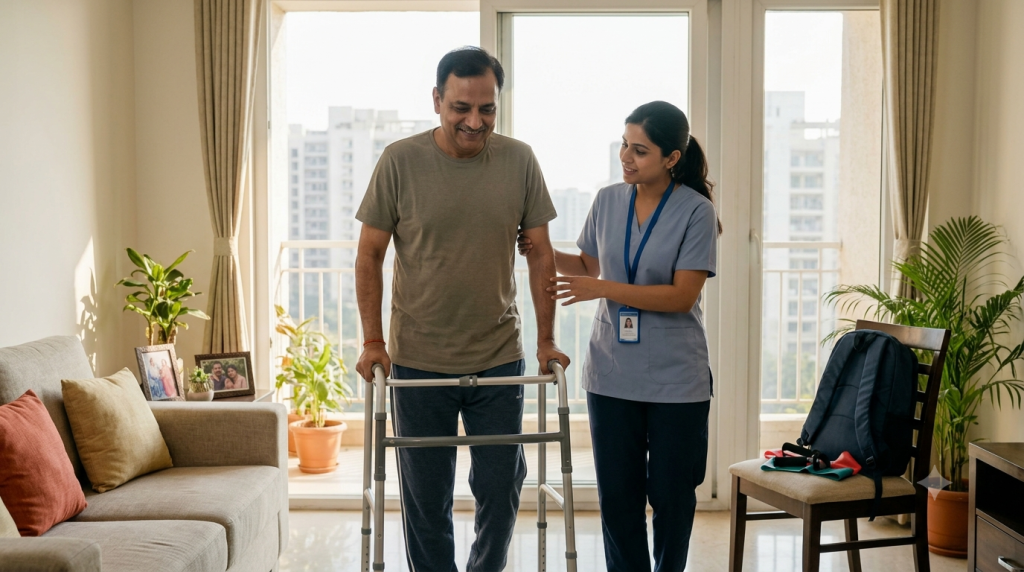
First steps after surgery feel significant. But walking independently through the home, getting to the kitchen, moving between rooms without holding walls or waking someone up to help, is the milestone that changes what daily life actually feels like.
It needs a few things to come together at once. Enough muscle strength around the surgical site. Balance that’s been knocked around by weeks of limited movement starting to come back. A walking pattern that isn’t quietly compensating for pain in ways that create new problems down the line.
Physiotherapy at home in Gurgaon works on this in the actual spaces where it needs to happen. The real hallway. The actual distance from bedroom to bathroom. Not a clinic corridor that has nothing to do with how your home is laid out. That specificity matters more than most people expect.
3. Managing Stairs
For most people living in Gurgaon, this one can’t be skipped. Apartments across South City, Sushant Lok, and sectors around Golf Course Road have floors to deal with. Until stairs work, independence doesn’t really work either.
Stairs after surgery are harder than they look. Single-leg loading. Trusting the joint with full body weight on one side while the other lifts. It needs strength and confidence that build at their own pace, and pushing toward stairs before either is ready sets things back rather than forward.
Patients searching for a “physiotherapist near me in Noida” and across the NCR often say this milestone took longer than expected. The physiotherapist gets there when the clinical picture says it’s right, not just when the patient is tired of avoiding them.
4. Sleeping Through the Night
This one doesn’t get listed as a milestone often enough, and it should.
Sleep after surgery is fragmented for most people. Pain wakes you up. Getting comfortable takes ages every time you shift position. After a few weeks of this, everything suffers. Mood, energy, pain tolerance, motivation to do the exercises. All of it.
A physiotherapist addresses this more directly than most patients expect. Positioning that supports the healing area without creating pressure elsewhere. Exercise timing throughout the day that takes the edge off pain spikes at night. Gradual confidence in the joint so the body stops bracing protectively every time you move in your sleep.
The first night things improve, patients notice it the next morning. Recovery starts feeling like it’s actually moving somewhere.
5. Getting Back to the Daily Routine
Getting dressed without it taking twenty minutes. Making tea without thinking about every movement. Moving through the morning without surgery being the main thing on your mind.
This is the one that tells you recovery has genuinely happened rather than just being managed.
Physiotherapy at home in Gurgaon builds toward exactly this. The physiotherapist watches you move through your real kitchen, your actual bathroom, your morning routine as it actually happens. They correct what needs correcting in context, not in a clinical room that has nothing to do with how you live.
Disclaimer: This article is general information only and isn’t medical advice for your specific surgical recovery. Please follow your surgeon’s instructions and consult a qualified physiotherapist before beginning any rehabilitation programme.