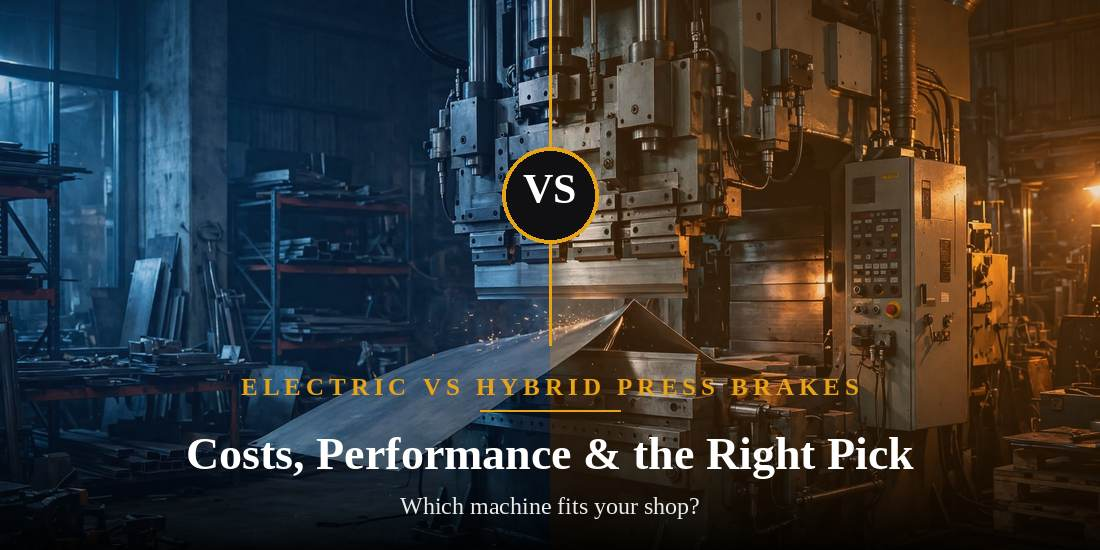

A press brake bends sheet metal into shapes. It pushes a top tool down onto a bottom tool, and the metal folds between them. Shops use it for panels and brackets. The drive type decides ram speed, power use, and bend accuracy.
Electric and hybrid are the two modern choices. Both bend sheet metal, but they use different power systems. The right pick depends on the work you do every day, the thickness you bend, and the budget you have. You can learn more about both types at https://miharmle-cnc.com/ before you decide.
How Each Type Works
An electric press brake runs on servo motors. The motors turn ball screws or belts. The screws move the ram down and up. It uses no hydraulic oil. Power flows only while the ram moves, so the machine rests quietly between parts.
A hybrid press brake mixes both systems. A servo motor drives a small hydraulic pump. The pump runs only when the ram needs force. Oil still flows, but the tank is small and the pump does not run all day.
What It Costs to Run
The price tag is only the start. Power, oil, and upkeep decide what the machine really costs.
Power Bills
An electric machine uses 50 to 70 per cent less power. Old hydraulic machines use far more. A hybrid uses 40 to 60 per cent less. Both save power, but electric saves more. Power flows only while the ram moves. So the bill drops fast on light work. Over a year, the gap is easy to see.
Oil and Upkeep
An electric machine has no oil at all. Nothing leaks, spills, or needs to be thrown away. A hybrid still uses oil, but far less than an old machine. Its tank holds 30 to 50 litres, not 150 or more. Oil, filters, and seals need checks, and old oil costs money to throw away. A cleaner floor and no disposal costs save money.
How They Perform on the Shop Floor
Speed: More Parts Per Shift
Electric machines are very fast. Approach and return take little time. A hybrid is fast too, but oil flow sets its bending speed. On repeat work, the electric machine makes more parts per shift. More parts per shift means more orders done on time.
Accuracy: Microns, Not Guesswork
Servo motors hold the ram steady. An electric machine repeats bends to a few microns. A hybrid is close behind, since its servo pump controls oil flow. Both beat old hydraulics, which drift as oil warms. Tight angles mean less rework and less scrap.
Force: Thin Sheet or Thick Plate
Electric machines shine on thin to medium sheet. They work best below 200 tons. A hybrid keeps hydraulic muscle. It bends thick plate and reaches high tonnage. For heavy plate, the hybrid wins. Match the tonnage to your thickest regular job.
Noise: A Shop You Can Talk In
An electric machine runs quietly. There is no pump hum and no oil rush. A hybrid is quieter than a full hydraulic machine. But its pump still makes sound. You can hear it in a small shop. A quiet shop is a safer and calmer place to work.
Mistakes Buyers Make
Shops pick the wrong machine for the same few reasons.
- Buying on tonnage alone. A big number looks safe, but thin work on a heavy machine wastes power and floor space.
- Forgetting the running cost. A cheap machine with high bills costs more in five years than a pricey machine with low bills.
- Ignoring cycle time. A slow machine on repeat work means fewer parts per shift and late orders.
- Skipping the test bend. Always bend your thickest part and time twenty cycles before you sign.
Which One Fits Your Shop?
- Pick electric when you bend thin to medium sheets all day. It fits small, precise parts and high-volume runs.
- Pick hybrid when thick plate and heavy tonnage fill your week. It also fits shops that bend a wide mix of parts.
Think about budget. Electric costs more at first. So a small shop may start with hybrid and upgrade later. If thick work is growing, a hybrid leaves room to grow. When in doubt, list your last ten jobs. The machine that fits most of them is the right one. Match the right machine to your work, and the choice gets easy.
Conclusion
Electric wins on speed, precision, and cost. It is the clean, quiet pick for thin sheet. It suits busy shops that run the same parts again and again. Hybrid wins on force and heavy work. It gives you hydraulic muscle. It wastes far less than the old machines it replaces.
Look at your daily work before you buy. Count up your thin jobs and thick jobs. Then pick the machine that fits most of your work. That is how you get the best bend for your money, shift after shift.