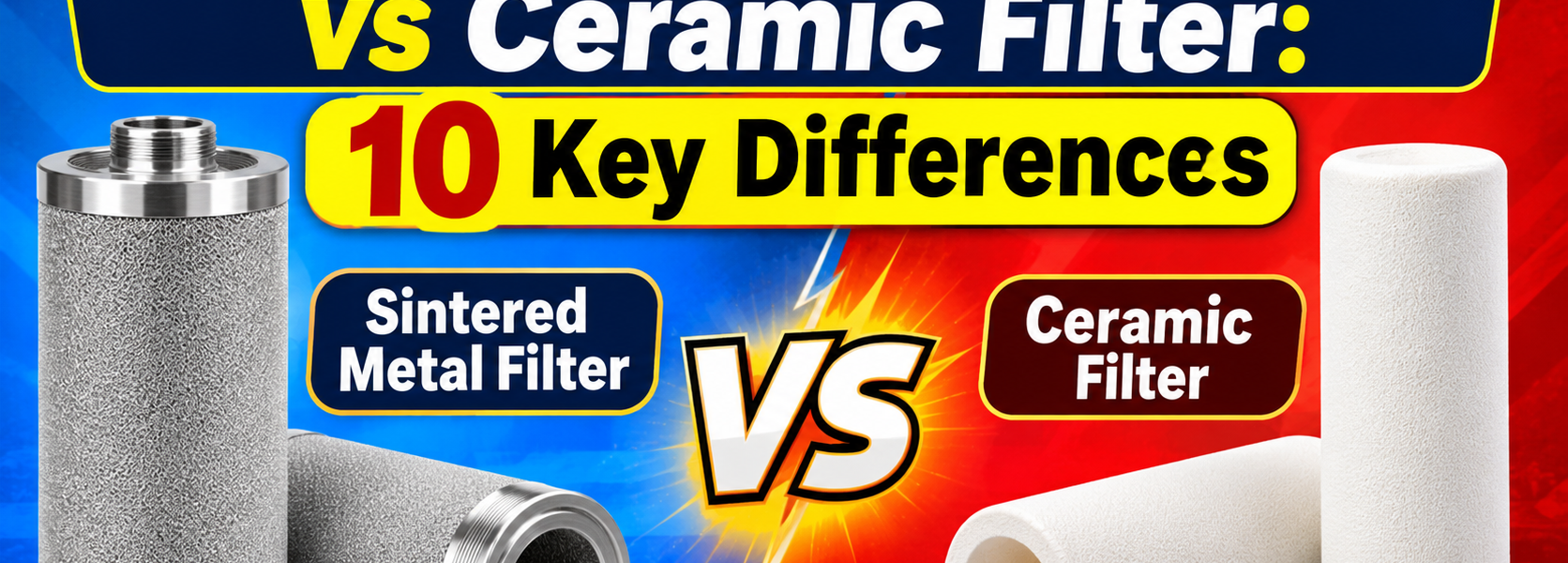

A sintered filter traps tiny particles as fluid passes through it. Makers press fine powder into shape, then heat it. The heat bonds the grains but never melts them fully. Small gaps stay open between the grains. Those gaps are the pores. Fluid flows through the pores, and solids stay behind.
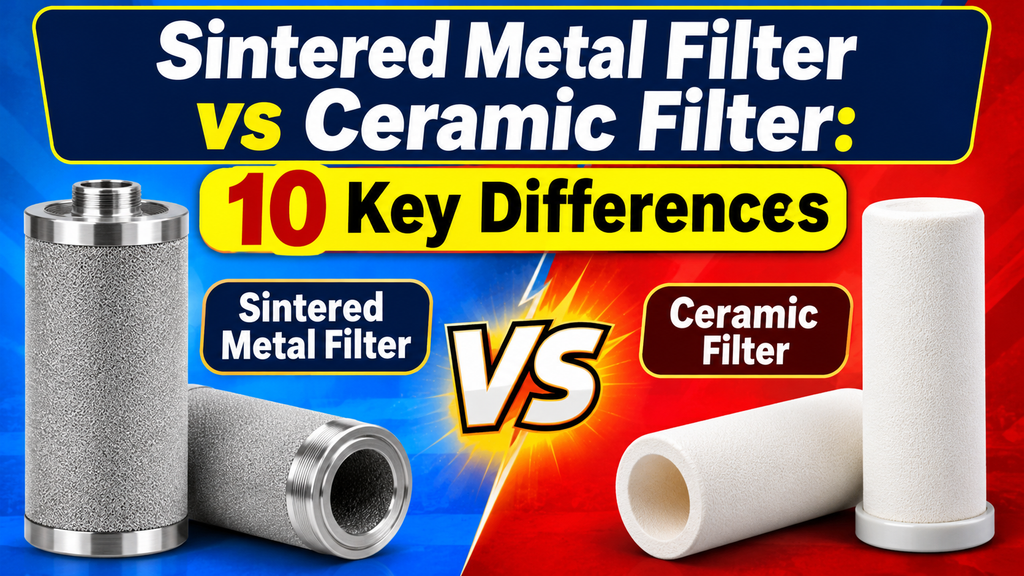
Metal and ceramic are the two main types. Both do the same job, but they win in different places. Metal is strong and handles high pressure. Ceramic catches finer particles and resists harsh chemicals. The right pick depends on your fluid, your heat, and your pressure. You can see both types and their specs at Nesia Filter before you decide.
Two Filters, One Job: Same Process, Different Material
Both filters are born the same way. Fine powder is pressed into shape, then heated. The heat bonds the grains. Pores stay open between them. The difference is the powder itself. One uses metal. The other uses ceramic.
Sintered Metal: Powder Pressed, Then Heated
Metal powder means steel, bronze, titanium, or nickel. Stainless steel is the common choice. Workers press and heat the powder. The grains fuse at their contact points.
Ceramic: Shaped Powder Fired at High Heat
Ceramic powder means alumina or silicon carbide. Workers shape and fire the powder at high heat. The grains bond into a hard body with fine, even pores.
10 Key Differences Side by Side
The table below puts all ten side by side. Read it once, and the choice gets clear.
| Difference | Sintered Metal | Ceramic |
| Strength | Tough, takes knocks | Brittle, cracks on impact |
| Heat | -200 to 600 °C | Alumina 1000 °C and more |
| Thermal shock | Handles heat cycles well | Cracks on sudden change |
| Pressure | Up to 30 MPa (150 bar) | Near 40 bar |
| Pore size | 0.1-100 microns | 0.1-10 microns, finer |
| Flow rate | Fast, wide pores | Slower, fine pores |
| Chemical resistance | Wide range; some metals corrode | Resists acids, bases, solvents |
| Cleaning | Backwashes well | Smooth surface, easy to clean |
| Lifespan | About 24 months | About 18 months |
| Cost | Higher per unit | High-end grades cost more |
What Breaks First: Ceramic Cracks, Metal Clogs
Filters rarely wear out slowly. They break. Ceramic breaks from a dropped tool or a fast heat jump. One crack is enough, and the filter is done. Metal fails slowly. It clogs, or its surface corrodes over time.
So handle ceramic like glass. Metal needs less care, but store it dry. Wet storage rusts the surface and blocks the pores. A cracked ceramic filter can also shed bits into your line. Those bits can jam a valve or spoil a batch.
The Money Question: Price Tag vs Total Cost
The price tag lies. A cheap filter that cracks in a month costs more. A dear one lasts two years. Count the full cost. Metal often wins that count. It lasts longer and cleans well. Ceramic wins only when nothing else survives the heat or the fluid.
So do not buy on price alone. Buy on cost per month of clean service. Ask the seller for life data. Then pick the filter that costs less over its whole life.
Downtime is the hidden cost. A line that stops for a filter change loses hours. A filter that runs two years without a stop is worth more.
A 5-Minute Check Before You Buy
Run these five checks before you order. They take five minutes and save you from a bad buy.
- Write down your fluid, heat, and pressure.
- Pick the pore size your job needs, not the finest one.
- Ask how to clean it and how often.
- Ask how long it lasts in your kind of line.
- Test one filter in your real line first.
Pick in One Minute: Metal or Ceramic for Your System
- Pick metal when your line runs at high pressure. It fits rough service and wide, fast flow.
- Pick ceramic when you need fine filtration, high heat, or harsh chemicals. It fits calm lines and clean fluids.
If you are still not sure, then match the filter to your fluid first. Heat comes second. Pressure comes third. The filter that fits all three is the right one.
If both fit, pick metal. Ceramic only wins when metal cannot cope. It wins on heat, fluid, or fineness you need.
Conclusion
Metal wins on strength, pressure, and rough service. It is the tough pick for high-pressure lines and busy plants. It keeps working where other filters fail. Ceramic wins on fine filtration, heat, and chemical resistance. It is the precise pick for hot gas, harsh fluids, and clean water.
Look at your fluid, your heat, and your pressure before you buy. Then pick the filter that fits most of your daily work. That is how you get clean fluid for your money, shift after shift.